Digital Implant PlanningHow the Scan, the Software, and the Surgical Guide Decide the Outcome Before the Drill Touches Bone
- Digital implant planning turns your CBCT scan and intraoral scan into a printed surgical guide, so each implant goes where your new teeth need it.
Your CBCT scan is from $60, and the printed guide is priced at the CBCT rate, from $60.








Overview
Digital implant planning joins two procedures: the cone-beam CT (CBCT) scan, and the printed surgical guide that sits on your teeth during placement. The scan shows where your bone is, the prosthetic plan shows where each tooth needs to be, and the guide holds the drill to that plan.
For patients reading from New Zealand
The scanners, the planning software and the printed guides work the same way worldwide. What differs between clinics is who reads your scan, and how many specialists check it.
No implant plan is final until a second clinician signs it in the planning software. An angulation error of 1 millimetre still allows a clean prosthesis. An error of 4 millimetres can mean a re-do six months later.
Questions about this procedure?
Why Choose Stunning Dentistry for Digital Implant Planning?
Your CBCT scan and planning session are included in every implant case, and the printed surgical guide in every All-on-4, All-on-6 and multi-implant case. On its own, the scan is from $60 and the guide is priced at the CBCT rate, from $60. A CBCT scan at a New Zealand clinic costs [figure needed]. Full breakdown in the cost table below.
Precision and our own lab. The planning, the printing and the quality control all happen under one roof. We run an in-house dental lab and our own 3D printer, so your guide is designed, printed overnight and checked by our own QA team rather than outsourced and shipped. Scanning runs on TRIOS 3Shape with CAD/CAM workflows. Your written quote names your implant tier: Osstem, Dentium or Zimmer at the Preferred tier, Straumann or Nobel Biocare at the Premium tier.
Written Lifetime Warranty | 25+ super-specialists | Forbes India: No.1 Dental Clinic in India | AAID · AAE · BACD · FDI · ISO 9001:2015 | 10-year open file with milestone reviews | Dr. Priyank Sethi, lead clinician.
Read before you decide. Why India for Dental Treatment and Why Stunning Dentistry set out the wider case for treating here. If you are weighing implants abroad against other destinations, see India vs Bali and India vs Turkey, and the evidence on are dental implants abroad safe?
Ready to discuss your options?
Why Did Digital Planning Replace Eyeball-and-Experience?
Digital planning replaced freehand implant placement because CBCT scans, planning software and printed guides let your surgeon see the bone, nerve and sinus before drilling instead of estimating from a flat X-ray. Freehand placement meant reading a panoramic X-ray, palpating the ridge, opening a flap and drilling by training and feel, then the lab had to build the tooth around whatever angulation resulted.
That workflow produced two predictable failure modes:
- Prosthetically-compromised implants. The implant osseointegrated successfully, but the angulation forced the lab to build a screw-retained crown with the access hole through the buccal surface, or to build a cement-retained crown with a bulky cantilever. The crown looked and bit worse, and it was harder to maintain.
- Bone-violation incidents. The surgeon under-estimated proximity to the inferior alveolar nerve, the maxillary sinus, the nasopalatine canal, or an adjacent root. Most went unnoticed at the time and surfaced as paraesthesia, sinus communication, or root resorption months later.
CBCT scanning, planning software and printed guides let your surgeon see both risks before drilling.
Curious about costs and timelines?
The Two Procedures Inside Digital Planning
1. CBCT-Based Implant Planning
This is the imaging step. A CBCT (cone-beam computed tomography) scanner takes a three-dimensional volumetric scan of your jaws. The DICOM file is loaded into planning software. The software reconstructs the bone, identifies the inferior alveolar nerve and the maxillary sinus, and lets the clinician place implants virtually on the screen, then check angulation, depth and proximity to anatomical structures before any drilling happens.
Stunning Dentistry uses the Carestream CS 9600 unit.
The full procedure is documented at /treatments/digital-implant-planning/cbct-planning/, including how your scan is read.
2. Guided Implant Surgery
This is the placement step. Once the digital plan is finalised, the software exports a surgical-guide design file. We print the guide overnight in our own lab in dental-grade biocompatible resin, sterilise it and seat it on your teeth on the day of surgery. The guide has metallic sleeves at each implant site that physically constrain the drill to the planned trajectory and depth.
There are two sub-types: static guides, which sit on your teeth and do not move, and dynamic navigation, where the surgeon's drill carries an optical tracker and the implant position is verified in real time on a screen. Dynamic navigation is reserved for full-arch zygomatic placement and complex maxillofacial-prosthetic cases where the printed-guide footprint would obscure access.
The full procedure is documented at /treatments/digital-implant-planning/guided-surgery/, including the static-vs-dynamic decision criteria, the printing tolerances we hold, and the verification protocol that runs at the start of every guided case.
Want a personalised treatment plan?
What This Adds to Your Quote (in NZD)
For New Zealand patients, the digital-planning workflow is a line item on the quote and a question on the consult: is the scan included, is the guide included, and what does each cost if not?
A CBCT scan at a New Zealand clinic costs [figure needed]. Your written NZD quote lists every clinical item before you travel.
| Component | Bundled in our full-arch packages? | Standalone price |
|---|---|---|
| CBCT scan (Carestream CS 9600, both arches) | Yes, every implant case | from $60 |
| Planning software session | Yes, every implant case | [figure needed] |
| Static printed surgical guide (one or two arches) | Yes, for All-on-4, All-on-6 and multi-implant cases | from $60, priced at the CBCT rate |
| Dynamic navigation (zygomatic and complex full-arch) | Quoted when your case needs it | [figure needed] |
| Pre-flight scan from a New Zealand radiology centre (optional) | n/a | [figure needed] |
Questions about this procedure?
When Does Digital Planning Change the Treatment Plan?
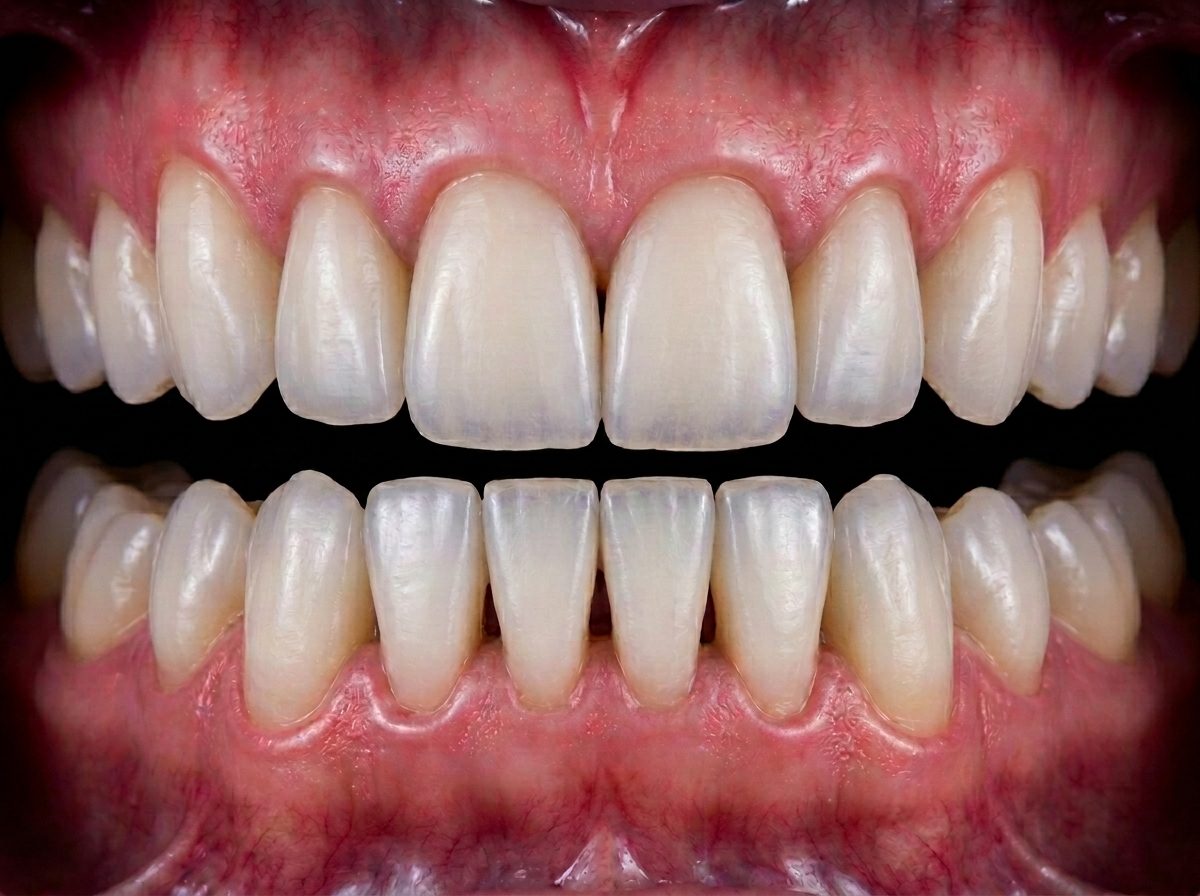
The scan changes your plan when it finds what a panoramic X-ray misses: sinus pneumatisation, nerve proximity, lingual concavity, buccal bone deficiency or low bone density.
- Sinus pneumatisation that was not visible on the panoramic. Posterior maxillary cases that looked routine become sinus-lift cases.
- Inferior alveolar nerve proximity below 2 millimetres. Posterior mandibular cases that looked routine become short-implant cases or guided-position adjustments.
- Lingual concavity in the posterior mandible. The freehand trajectory would have perforated the lingual cortex; the guide angulates the implant 8 to 12 degrees more buccally.
- Buccal bone deficiency in the maxillary anterior. A prosthetically-driven plan calls for slightly palatal placement plus a contour graft.
- Trabecular bone density at D4. Primary stability is predicted to be insufficient for immediate loading; the plan shifts to delayed loading.
Each of those decisions is documented in the planning software, signed by two clinicians and explained to you in the consult.
Ready to discuss your options?
How the Bench Depth at Stunning Dentistry Changes the Read
A CBCT volume can be read by one clinician or by several. At Stunning Dentistry every implant case runs through:
1. The placing surgeon, an oral and maxillofacial surgeon.
2. The prosthodontist, who reads the scan against your final teeth.
3. The radiology lead, who adds a third read when the inferior alveolar nerve, the maxillary sinus or any pathology is within 3 millimetres of a planned implant.
4. Dr. Priyank Sethi, who countersigns the final plan on every full-arch and every aesthetically critical case.
Curious about costs and timelines?
For New Zealand Patients: The Pre-Flight Scan Question
Many New Zealand patients ask whether they should have the CBCT scan done locally before they fly. The answer depends on where you live and what the lead time is:
- If you are within a 90-minute drive of a major New Zealand city, the local scan is useful for planning before you book travel. Most New Zealand radiology centres charge [figure needed] and send the DICOM file by secure transfer, and we review it in your free video consult.
- If the scan is more than two weeks old by the time you arrive, we re-scan in-house. Bone changes, and restorations get added or replaced, so the plan needs a recent scan.
- If you have no New Zealand scan, we take one in-house on day one of your first trip to New Delhi. No New Zealand scan needed.
Send your scan, or book a free video consult first, and we tell you what your plan needs before you plan any travel.
Want a personalised treatment plan?
What This Hub Links Down To
- CBCT-Based Implant Planning: a 3D scan maps your bone, nerve and sinus.
- Guided Implant Surgery: a printed guide holds the drill to the planned angle.
For the broader treatment context this digital planning sits inside, see Full Mouth Rehabilitation and Oral Surgery.
Questions about this procedure?
Ready to Start?
Every case is planned by a named lead clinician and backed by a written Lifetime Warranty. Share your scans or a photo for a no-obligation clinical assessment.
Ready to discuss your options?
Specialist-only treatment planning
- Remote file review before travel
- Evidence-led treatment checkpoints
No waiting list for eligible cases
- Remote file review before travel
- Evidence-led treatment checkpoints
Trip coordinated with care timeline
- Remote file review before travel
- Evidence-led treatment checkpoints
Our Partners










Why Us
Frequently Asked Questions
Is the CBCT Mandatory, or Can We Work From a Panoramic?
Yes. We scan every implant case with CBCT before planning. A panoramic X-ray is a flat 2D image, and implant placement is a 3D problem: the scan shows bone width, the nerve canal and the sinus floor before any drilling. Your CBCT scan is from $60 and is included in every full-arch package.
What Is the Radiation Dose?
A CBCT scan uses a low radiation dose. The dose for your scan is documented on the CBCT page, and we go through it in your free video consult.
Can I Bring a Scan From a New Zealand Radiologist?
Yes, if it is recent (under two weeks) and at 200-micrometre voxel resolution or finer. We accept DICOM by secure transfer and review it in your free video consult.
Is the Printed Guide Reusable?
No. Each guide is made for one patient and used once. For All-on-4, All-on-6 and multi-implant cases the guide is included in your quote. For a single implant it is priced at the CBCT rate, from $60, and listed on your written quote.
What Happens if the Guide Does Not Seat Correctly on Surgery Day?
We check the guide's fit before the first drill. If it does not seat, we re-scan, re-print it overnight and move placement to the next day. The usual cause is a temporary crown or filling missing from the imaging form, so list every restoration before your scan.
Is the Scan Covered by Insurance in New Zealand?
Adult dental care is not publicly funded. New Zealand funds dental care up to age 18, after which adults pay privately. ACC covers dental damage from an accident, but not tooth loss from decay or gum disease. Most New Zealand private health insurance plans do not adequately cover dental implants, and annual limits sit well below a full-arch case and carry waiting periods, so ask your insurer for a written predetermination before you travel. You fund treatment from your own funds, and we supply itemised receipts. ---