Oral SurgeryThe Pre-Implant and Adjunctive Procedures That Make Long-Term Success Possible
- Oral surgery prepares your jaw for implants when the bone, the sinus or the gum cannot hold them as they are.
Bone grafting is from $490 per quadrant and a sinus lift is from $490 per side.







Overview
Oral surgery modifies the jaw, the sinuses or the soft tissues before, during or after implant placement. It decides whether a patient told "you are not a candidate for implants" by a prior clinician is in fact a candidate, after staged augmentation.
Under the umbrella of Oral Surgery sit the bone-augmentation procedures (ridge preservation, lateral augmentation, block grafts, sinus lifts), the soft-tissue procedures (free gingival grafts, connective-tissue grafts, vestibuloplasty), the management of impacted or pathological teeth, and the surgical phases of orthognathic and maxillofacial-prosthetic treatment when those overlap with implant rehabilitation.
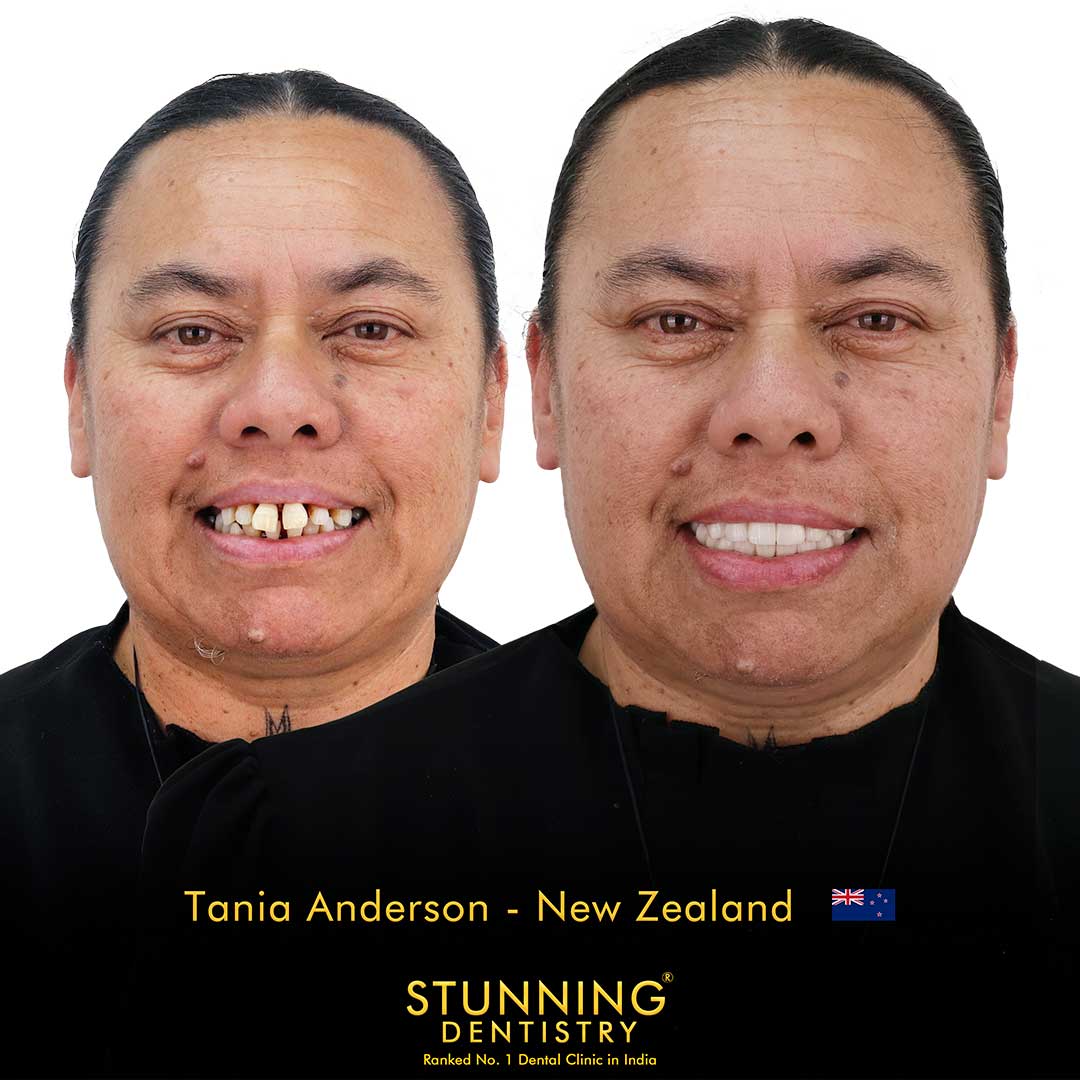
For patients reading from New Zealand
Oral and maxillofacial surgery is a recognised specialty in India. The protocols and biomaterials are international, and your written NZD quote lists each line item before you travel.
No augmentation case starts without a written staged plan that separates the surgical, implant and prosthetic phases. Each grafted site gets a minimum healing interval, and a CBCT scan confirms the bone has matured before an implant goes in.
Questions about this procedure?
Why Choose Stunning Dentistry for Oral Surgery
The cost reality. Bone grafting is from $490 per quadrant and a sinus lift is from $490 per side, with Geistlich grafting materials. The same work at a New Zealand private practice costs [figure needed]. Your written NZD quote lists every clinical item before you travel. The full per-procedure breakdown is in the cost table below.
Precision and our own infrastructure. Your graft is planned on CBCT and a TRIOS 3Shape intraoral scan, and the surgical guide comes from our in-house lab and 3D printer. Grafts use Geistlich Bio-Oss and Bio-Gide. Your written quote names your implant tier: Osstem, Dentium or Zimmer at the Preferred tier, Straumann or Nobel Biocare at the Premium tier.
Written Lifetime Warranty | 25+ super-specialists | Forbes India: No.1 Dental Clinic in India | AAID · AAE · BACD · FDI · ISO 9001:2015 | 10-year open file with milestone reviews | Dr. Priyank Sethi, lead clinician.
For the wider case, see Why India for Dental Treatment and Why Stunning Dentistry. Because grafting and sinus surgery sit directly in the implant pathway, patients comparing destinations often read India vs Bali, India vs Turkey, and Are dental implants abroad safe? before they decide.
Ready to discuss your options?
When Is Oral Surgery Indicated Before Implants?
Oral surgery is indicated at four points in the implant pathway: pre-implant site preparation, same-visit adjunctive surgery, surgical management of pathology, and orthognathic overlap cases. Knowing which point you are at, and why, is the first conversation in any consult.
1. Pre-Implant Site Preparation
The most common reason. The patient has missing teeth or failing teeth, and the bone or soft tissue at the site cannot accept an implant as it is. Categories include:
- Insufficient ridge width or height. The ridge needs lateral or vertical augmentation before an implant can be placed.
- Insufficient subantral bone. The maxillary sinus has pneumatised down to within 3 to 5 millimetres of the crest. A sinus lift is required.
- Insufficient keratinised gingiva. A free gingival graft or connective-tissue graft is required to ensure long-term peri-implant health.
- Failing teeth that need extraction with ridge preservation. Teeth come out and the socket is grafted to preserve the ridge for delayed implant placement.
2. Same-Visit Adjunctive Surgery
Cases where the surgical and the augmentation phases happen in the same visit. The classic example is socket grafting at the time of extraction, where bone substitute is packed into the socket immediately, with or without a membrane, to preserve ridge dimensions for implant placement four to six months later. Another is the pterygoid implant placement that is sometimes used as an alternative to sinus lift in posterior maxilla cases.
3. Surgical Management of Pathology
Impacted third molars, dentigerous cysts, odontogenic keratocysts, and other pathological lesions of the jaws. Some of these are routine outpatient cases under local anaesthesia. Others require general anaesthesia, which we plan with you before you travel.
4. Orthognathic Overlap Cases
A small number of full-arch cases have a skeletal discrepancy (Class III mandibular prognathism, maxillary hypoplasia or severe asymmetry) that implants cannot correct alone. Those cases need an orthognathic component and are planned with you before you travel. They are documented separately under the Orthognathic Surgery clinical pathway and are out of scope for this hub.
Curious about costs and timelines?
The Two Procedures Inside the Pre-Implant Pathway
1. Bone Grafting
This is the most commonly required pre-implant procedure. Your plan sets which graft, how much, which biomaterial, in what order and how long it heals before the implant goes in. The categories we work with are:
- Ridge preservation grafts. Performed at the time of extraction to preserve socket dimensions for delayed implant placement.- Lateral (horizontal) ridge augmentation. Performed to widen a knife-edge ridge. Membrane-protected particulate, or block grafts harvested from the chin or the ramus, depending on the volume required.
- Vertical ridge augmentation. Performed to add height to a deficient ridge. Higher-complexity, longer healing interval (six to nine months), reserved for cases where short-implant or zygomatic alternatives are not viable.
The full procedure, the biomaterials we use and why, the cases where grafting can be skipped, and the cost in NZD are documented at /treatments/oral-surgery/bone-grafting/.
2. Sinus Lift
Specific to the posterior maxilla. When the maxillary sinus has pneumatised down to within roughly 5 millimetres of the alveolar crest, an implant of normal length cannot be placed without entering the sinus. A sinus lift adds bone substitute to the floor of the sinus, raising the available bone height. There are two approaches:
- Lateral window approach. A bony window is opened on the lateral wall of the maxilla, the sinus membrane is elevated, and bone substitute is packed into the space created.
- Crestal (Summers) approach. A more conservative approach via the implant osteotomy itself. Suitable when 5 to 7 millimetres of crestal bone remain.
The full procedure, the membrane perforation rate, the decision criteria between lateral and crestal, and the threshold at which zygomatic implants beat both approaches are documented at /treatments/oral-surgery/sinus-lift/.
Want a personalised treatment plan?
How Much Does Oral Surgery Cost Compared to New Zealand?
Your written NZD quote lists every graft, membrane and sedation item before you travel.
Zygomatic implants, which bypass the sinus floor when upper-jaw bone is too thin, are from $785 per implant, the zygomatic and pterygoid rate. A full zygomatic arch in New Zealand costs $38,000-$50,000 per arch.
| Procedure | Stunning Dentistry (NZD) |
|---|---|
| Tooth extraction (any socket graft is priced in your quote) | from $50 per tooth |
| Bone grafting, including ridge preservation | from $490 per quadrant |
| Sinus lift, lateral window or crestal | from $490 per side |
| Block graft | [figure needed] |
| Soft-tissue graft (free gingival or connective-tissue) | [figure needed] |
| Impacted wisdom tooth removal | Quoted in your written plan |
| IV sedation | Quoted separately if you choose it |
Questions about this procedure?
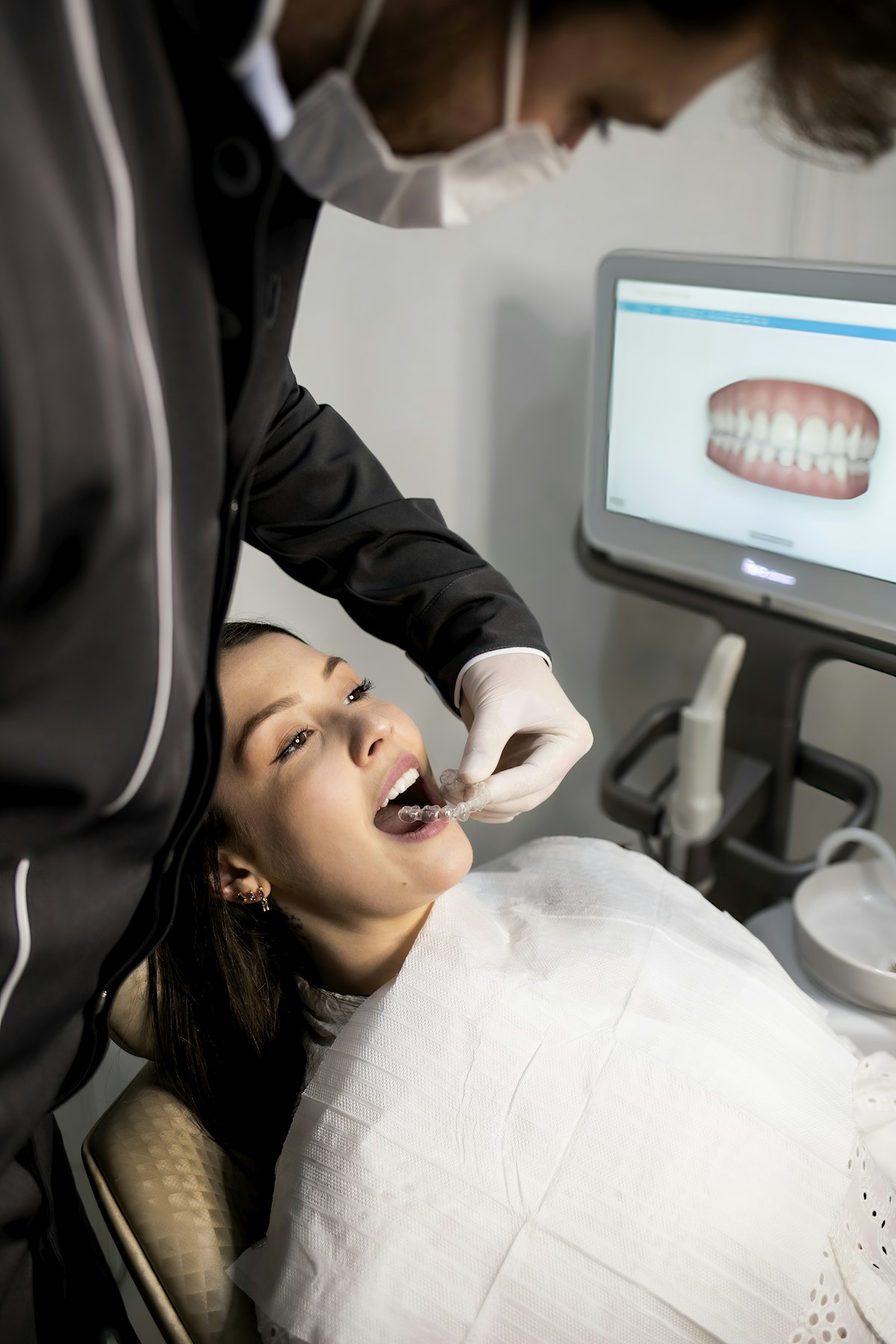
Where Your Oral Surgery Takes Place
Most oral surgery at Stunning Dentistry is done in our own surgical operatories under local anaesthesia, with IV sedation if you choose it, quoted separately. If your case needs general anaesthesia or overnight observation, we plan it with you before you travel. These cases need that planning:
- General anaesthesia is required. Patient preference, surgical extent, or medical comorbidity drives this.
- Multi-quadrant extractions plus full-arch immediate-load placement in one operation. The combined surgical time is long, so the setting is planned in advance.
- Significant medical comorbidity. Patients on anticoagulants who cannot pause therapy, patients with significant cardiac history, patients with bleeding disorders.
- Complex pathology. Cysts requiring marsupialisation, lesions requiring biopsy and frozen-section, cases where overnight observation is appropriate.
Ready to discuss your options?
How Long Do You Have to Wait Between Grafting and Implants?
Healing intervals between grafting and implant placement run from 3 months for a socket graft up to 9 to 12 months for a sinus lift with a repaired membrane, and the timeline is not flexible.
Standard healing intervals:
If you need a graft, your treatment is staged: the graft heals first, and your implants are placed on a later trip. The healing time for your procedure is in the table above, and your surgeon confirms it on your CBCT scan before you book flights. We do not place implants into freshly grafted bone unless the simultaneous protocol (crestal sinus lift, simultaneous implant) is clinically appropriate. If you hope for a full arch without a graft on a deeply atrophic ridge, we walk you through the alternative: zygomatic implants, which bypass the maxillary alveolus entirely. That decision is documented on the Zygomatic Implants page.
| Procedure | Healing before next surgical phase |
|---|---|
| Socket / ridge preservation graft | 3 to 4 months |
| Lateral ridge augmentation (particulate + membrane) | 4 to 6 months |
| Block graft | 5 to 7 months |
| Vertical augmentation | 6 to 9 months |
| Lateral-window sinus lift | 6 to 9 months (membrane intact); 9 to 12 months (membrane perforated and repaired) |
| Crestal sinus lift with simultaneous implant placement | 4 to 6 months before loading |
Curious about costs and timelines?
What This Hub Links Down To
- Bone Grafting Before Implants: when your jaw is too thin to hold one.
- Sinus Lift for Upper Back Implants: raises the sinus floor so implants fit.
For the broader implant context this oral surgery sits inside, see Full Mouth Rehabilitation and Digital Implant Planning.
Want a personalised treatment plan?
Questions about this procedure?
Ready to Start?
Every case is planned by a named lead clinician and backed by a written Lifetime Warranty. Share your scans or a photo for a no-obligation clinical assessment.
Ready to discuss your options?
Specialist-only treatment planning
- Remote file review before travel
- Evidence-led treatment checkpoints
No waiting list for eligible cases
- Remote file review before travel
- Evidence-led treatment checkpoints
Trip coordinated with care timeline
- Remote file review before travel
- Evidence-led treatment checkpoints
Our Partners





Why Us
Frequently Asked Questions
Will I Need Bone Grafting?
Your CBCT scan answers this before treatment begins. You need a graft when the ridge is too thin or too short, or the sinus sits too low, for an implant to be placed. Full-arch implants are usually placed without a bone graft. When a graft is needed, your plan sets the healing time before the implant goes in. You can send an existing scan for review in your free video consult.
Can the Surgery Be Done Under Sedation Rather Than General Anaesthesia?
Most of it, yes. IV sedation is available if you choose it, quoted separately in your written quote. If your case needs general anaesthesia, we plan it with you before you travel.
What Is the Recovery Time for a Sinus Lift?
Expect five to seven days of moderate discomfort and two weeks of care rules: no straws, no flying and no sneezing with your mouth closed. Your bone then heals for the time shown in the healing table before the implant phase. Your surgeon sets your flight date at the surgery review. Documented in detail on the sinus lift page.
Is the Surgery Safe for Patients on Blood Thinners?
It depends on which blood thinner, the indication, and the prescribing clinician's pause-or-continue protocol. We coordinate directly with your cardiologist or haematologist in New Zealand before any surgery and do not unilaterally instruct patients to pause anticoagulation.
What Happens if a Graft Fails?
If a graft does not take, your surgeon plans a regraft. The written Lifetime Warranty document sets out what is covered, and you receive it before treatment begins. A failed graft differs from a tear in the sinus membrane during surgery, which the surgeon repairs in the same operation.
Can I Have the Graft in New Zealand and the Implants in New Delhi?
Yes. Your oral surgeon in New Zealand completes the graft, and we place the implants once your CBCT scan confirms the graft has healed. The records hand-off is set out on the bone-grafting page. ---