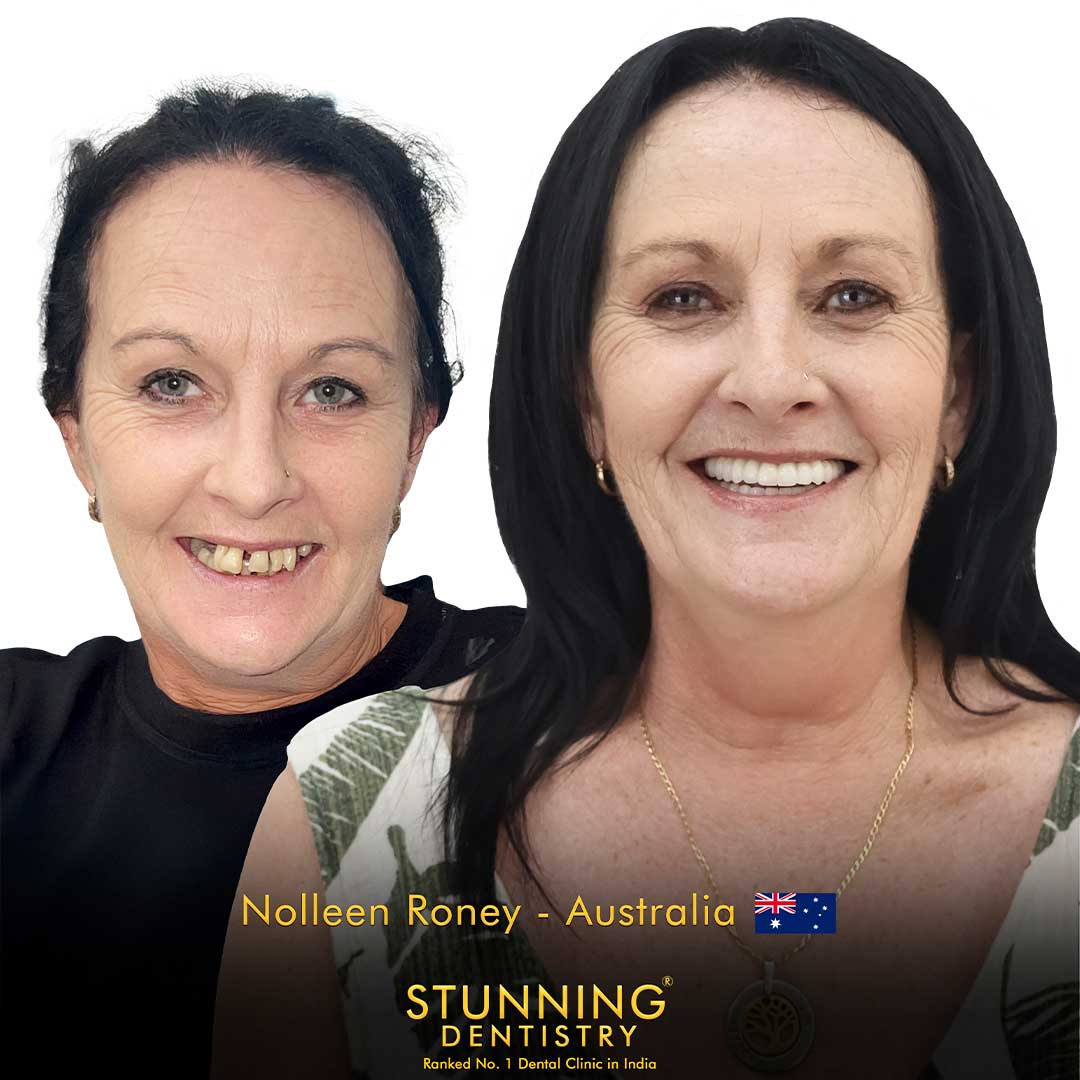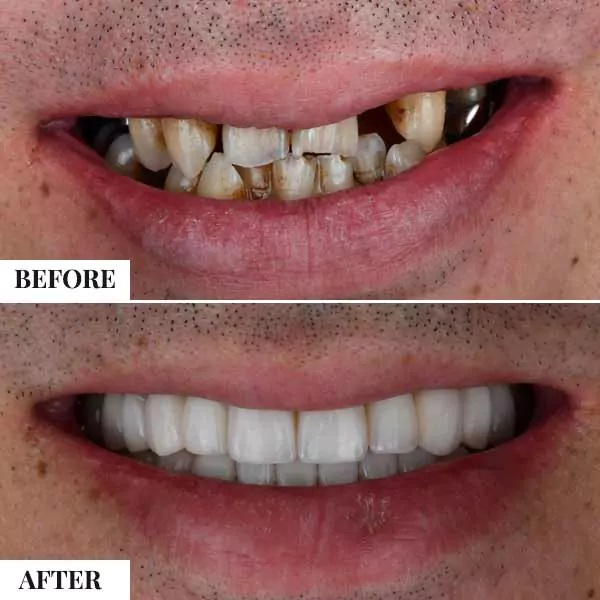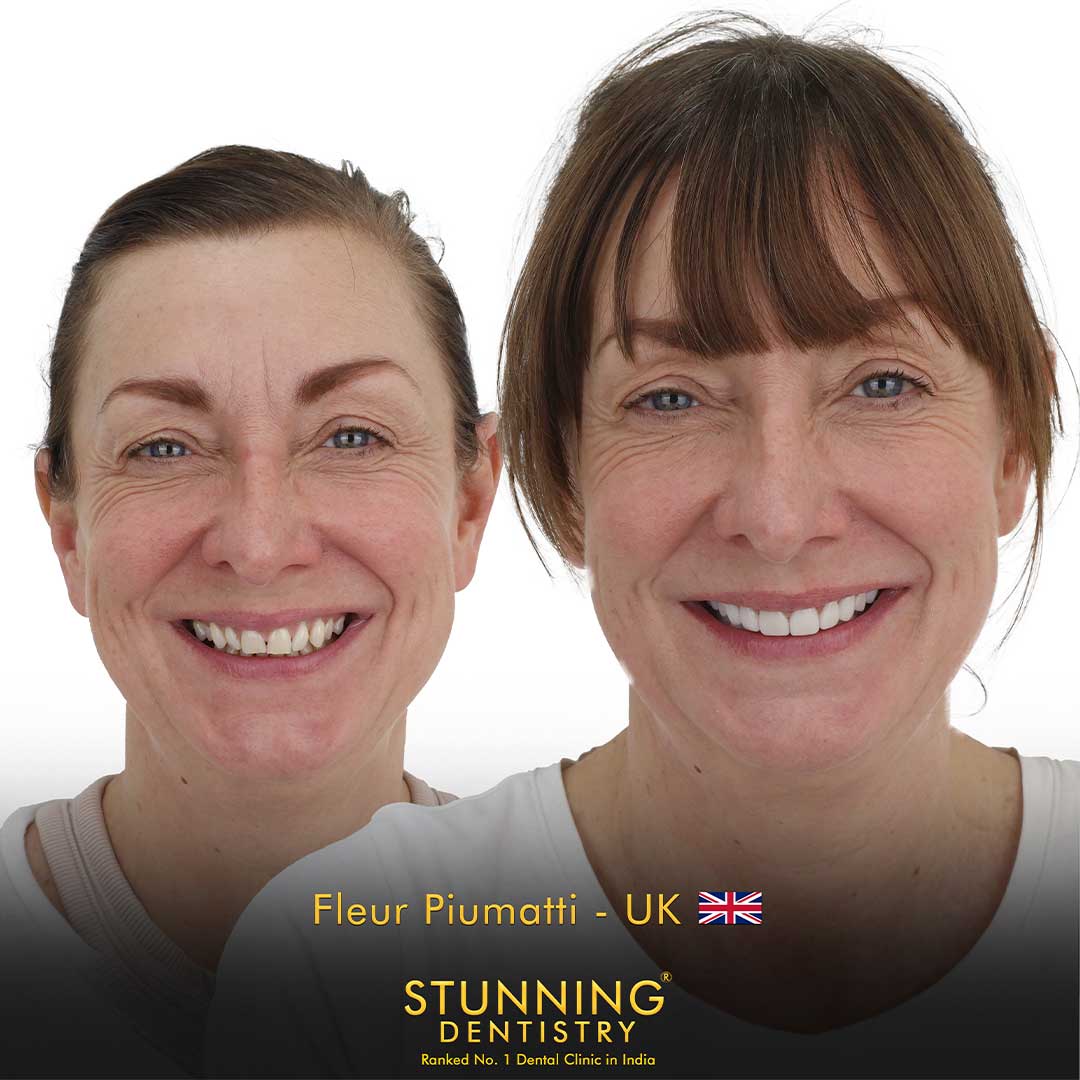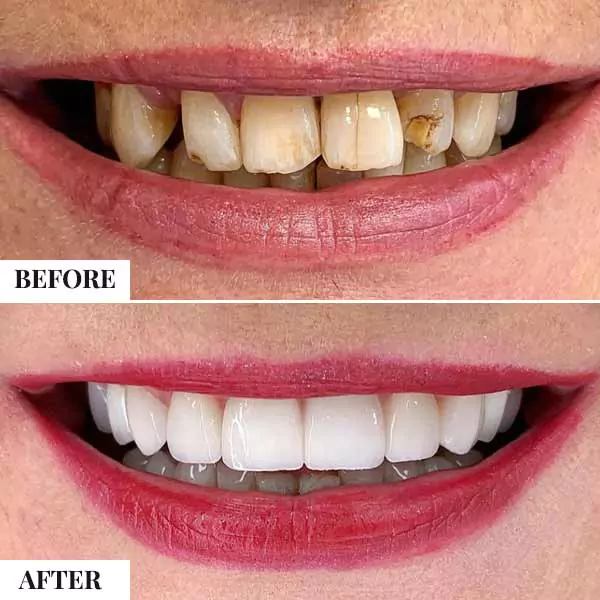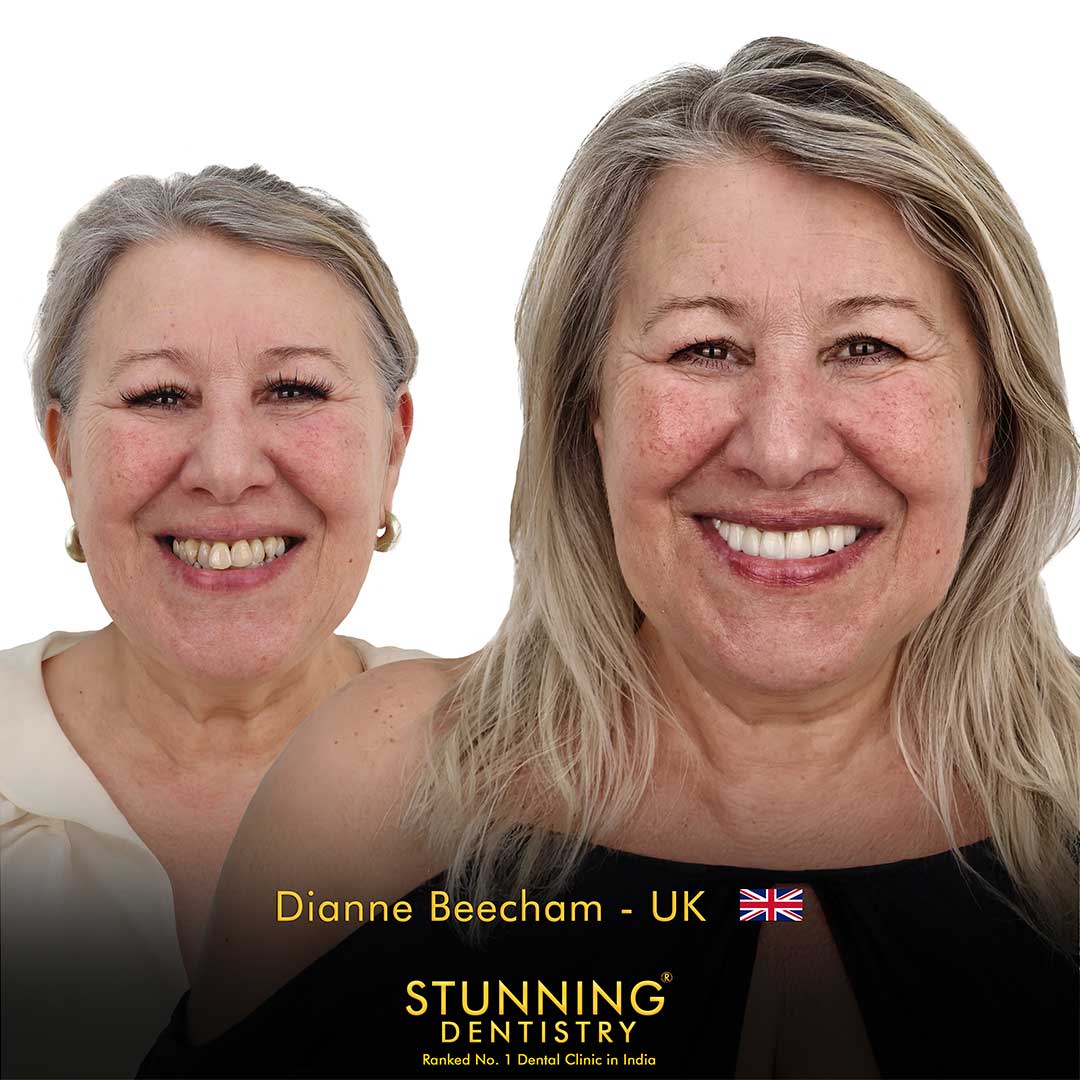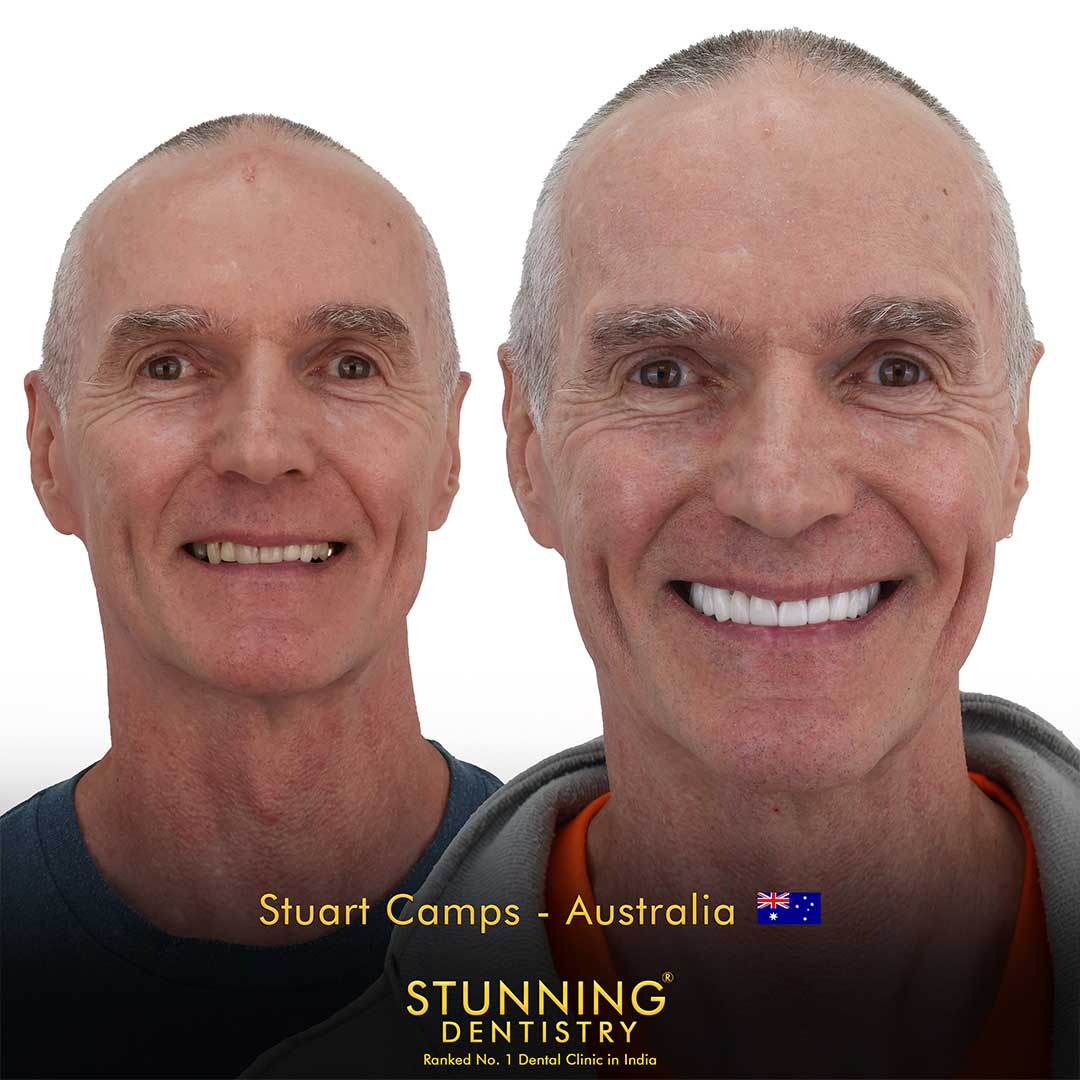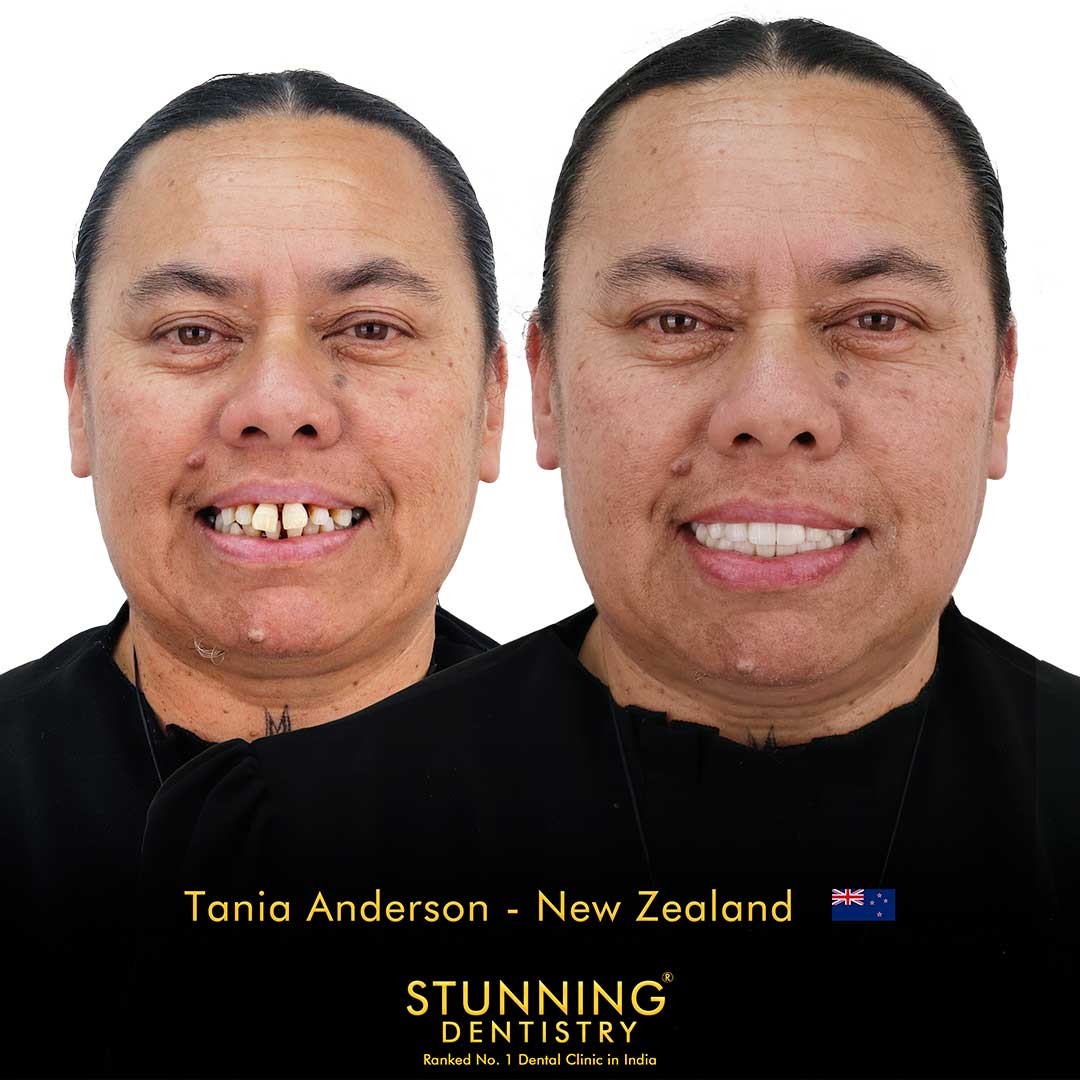
Smile Design in New ZealandDigital Planning, Aesthetic Protocols, and What the Process Actually Involves
- Smile design is not a single dental procedure, it is a planning and execution framework that coordinates multiple aesthetic and restorative treatments to achieve a defined outcome.
The distinguishing characteristic of a structured smile design approach, versus unsystematic cosmetic treatment, is the sequence: aesthetic analysis and digital planning precede any irreversible preparation of teeth.









Overview
What is smile design, and what does the process involve?
Smile design is a structured treatment planning methodology that uses digital imaging, facial proportion analysis, and clinical assessment to create a predictable aesthetic treatment plan before any irreversible dentistry begins. It typically incorporates dental veneers, crowns, composite bonding, tooth whitening, and gum contouring, selected and sequenced to achieve a specific visual and functional outcome planned in advance through digital mock-up.
Smile design is not a single dental procedure, it is a planning and execution framework that coordinates multiple aesthetic and restorative treatments to achieve a defined outcome. The distinguishing characteristic of a structured smile design approach, versus unsystematic cosmetic treatment, is the sequence: aesthetic analysis and digital planning precede any irreversible preparation of teeth. The patient sees and approves a digital simulation and a temporary mock-up in their own mouth before the permanent restorations are prepared and delivered.
The clinical disciplines involved in a comprehensive smile design depend on the patient's starting anatomy. Patients with intact, well-positioned teeth may require only veneers and whitening. Patients with structural damage, worn dentition, missing teeth, or significant gum architecture issues will require a combined approach, orthodontics, crown lengthening, bone grafting, implants, and ceramic restorations coordinated in a defined sequence. The scope of treatment determines the timeline, cost, and irreversibility of the interventions.
If you are considering changing the colour, shape, length, or overall appearance of your teeth, the starting question is not which procedure to have, it is whether the result you are seeking can be achieved with reversible, minimally invasive approaches (composite bonding, veneers with minimal preparation) or requires more extensive irreversible interventions (crowns, gum surgery, implants). That distinction should be established at the planning stage, before any treatment begins, based on your specific dental anatomy and aesthetic goals.
At Stunning Dentistry, we begin all smile design cases with a full facial and dental digital analysis, photographs, digital smile design (DSD) software mapping, and a diagnostic wax-up, before any treatment plan is presented. Patients see a digital preview and a physical mock-up that they can try in their mouths before the final plan is approved. No irreversible tooth preparation takes place until the patient has confirmed the planned outcome in the mock-up phase.
| Approach | Reversibility | Typical Indication | Duration |
|---|---|---|---|
| Composite bonding | Reversible (additive) | Minor chips, small gaps, shape changes | 1-2 visits |
| Porcelain veneers (minimal prep) | Largely irreversible | Colour, shape, size corrections; intact teeth | 2-3 visits |
| Full-coverage crowns | Irreversible | Structurally compromised teeth; heavy bite | 2-3 visits |
| Composite veneers (direct) | Reversible | Budget-conscious; lower durability | 1 visit per arch |
| Gum contouring (gingivectomy) | Irreversible | Gummy smile; uneven gum margins | 1 visit |
| Orthodontics + veneers | Mixed | Misalignment + shape/colour correction | 12-24 months total |
Questions about this procedure?
Why Choose Stunning Dentistry for Smile Design
The cost reality. A full arch of veneers and a complete Digital Smile Design at Stunning Dentistry cost substantially less than the same work with a New Zealand cosmetic dentist, using the same IPS e.max ceramics specified by New Zealand cosmetic laboratories. The exact figure depends on how many teeth are involved and which restorations your case needs, and is confirmed in a written, itemised quote after your digital smile analysis. For the New Zealand-versus-Stunning comparison, financing options, and a personalized quote, see Cost & Finance.
Precision, planned in our own lab. Every smile design is mapped in Digital Smile Design (DSD) software and fabricated in our own in-house ceramic lab, on our own 3D printer, under our own quality assurance, so the planning, the wax-up, and the final ceramics stay under one roof. We use IPS e.max (Ivoclar) lithium disilicate and high-translucency zirconia, the same materials specified by New Zealand cosmetic laboratories, with NZD/CAM workflows and TRIOS 3Shape intraoral scanning. The cost difference reflects overhead structure, not material quality.
Trust strip. Lifetime Warranty (written) | 25+ super-specialists | Forbes Best Dental Clinic India 4 years | AAID / AACD / BACD affiliations | 10-year open file with milestone reviews | Dr. Priyank Sethi lead clinician.
Every case is planned by a named lead clinician, documented tooth by tooth, and backed by a written Lifetime Warranty. To understand the wider context, see Why India for Dental Treatment and Why Stunning Dentistry.
Ready to discuss your options?
The Biological Basis of Smile Aesthetics
What makes a smile look natural?
A natural-looking smile is governed by established proportional relationships: the golden proportion (1:1.618) between adjacent teeth widths, the match between tooth length-to-width ratio (75-80% ideal), the relationship of tooth margins to the gum line, and the alignment of the dental midline with the facial midline. Departures from these proportions are what the eye reads as "wrong" even when the viewer cannot articulate why.
Dental aesthetics are not arbitrary, they operate within biological and evolutionary frameworks that the visual system processes implicitly. The golden proportion and Fibonacci spiral explain the pleasing visual weight of teeth that are proportionally sized to each other and to the face. The gingival architecture, the scalloped contour of the gum tissue around each tooth, mirrors the underlying bone and contributes to the perception of individual tooth form. Teeth that are structurally correct but set in dysharmonic gum architecture appear unaesthetic regardless of their individual restoration quality.
Colour perception in dentistry is multifactorial. Natural tooth colour is determined by the interplay of enamel translucency (which varies by thickness and opacity), underlying dentine value and hue, and the optical properties of the pulp chamber beneath. Ceramic restorations that attempt to replace this three-dimensional optical complexity face a fundamental challenge: a flat, uniformly opaque veneer or crown will always read as artificial against natural teeth, regardless of how closely the hue matches. Achieving aesthetic integration requires stratified ceramics that simulate enamel translucency and dentine depth.
You should understand that the result of smile design is not simply a function of which materials are used or how expensive the restorations are, it is determined by the planning precision with which proportion, colour, gum architecture, and occlusion are integrated. A ceramic veneer placed without addressing the underlying gum asymmetry, or without confirming that the planned tooth length is compatible with the patient's lip dynamics at full smile, will produce an aesthetically incomplete result despite technically good execution. This is why the planning phase carries more clinical weight than the restorative phase.
At Stunning Dentistry, our smile design process uses Digital Smile Design (DSD) software to map the patient's facial landmarks, lip mobility, and smile arc to the proposed tooth design before any wax-up or mock-up is produced. This software integration allows us to show the patient a realistic preview of the planned outcome in the context of their own face, not a generic "before and after" but a patient-specific digital simulation that forms the basis of the clinical prescription for the ceramist.
| Aesthetic Parameter | Ideal Range | Common Deviation | Clinical Fix |
|---|---|---|---|
| Tooth length-to-width ratio | 75-80% | Overly wide (worn), overly narrow (tapered) | Veneers with length addition; crown lengthening |
| Central to lateral to canine width | 1.618: 1: 0.618 | Disproportionate laterals; narrow centrals | Veneer reshaping; bonding |
| Dental midline to facial midline | ≤ 2mm deviation acceptable | Significant midline shift | Orthodontic correction first |
| Gingival margin symmetry | Contralateral teeth within 0.5mm | Asymmetric gum margins | Crown lengthening; gum grafting |
| Smile arc | Follows lower lip curvature | Flat arc (reverse curve) | Porcelain length additions |
| Axial inclination | Slight mesial lean | All teeth parallel (artificial) | Veneer shaping; orthodontics |
Curious about costs and timelines?
When Smile Design Becomes the Right Approach
When should I consider smile design rather than individual procedures?
Smile design is the appropriate approach when more than two anterior teeth require aesthetic modification, when the result needs to be planned across multiple teeth with a predictable outcome, when functional concerns (bite, wear, tooth structure) need to be addressed alongside aesthetics, or when the patient's goal is a comprehensive aesthetic transformation rather than a single-tooth correction.
Single-tooth corrections, a chip, a stain, a gap between two adjacent teeth, do not typically require a formal smile design process. They are appropriately managed as individual cases. Smile design becomes the correct framework when the number of teeth involved, the complexity of the aesthetic goal, or the functional concerns (bite changes, tooth wear management, gum architecture) exceed what can be addressed by unplanned individual interventions.
The most common presentations that benefit from structured smile design are: generalised dental wear where multiple anterior teeth have lost length and require coordinated lengthening; tetracycline or intrinsic discolouration that does not respond to whitening and requires veneers across the full anterior arch; congenitally missing or peg-shaped lateral incisors requiring combined bonding and orthodontic space management; gummy smile presentations where gum reduction is needed before veneers can achieve the correct proportions; and post-orthodontic refinements where aligned teeth still require shape and colour correction to complete the aesthetic result.
You should not have multiple anterior teeth prepared for veneers or crowns without a prior mock-up phase. The mock-up, a temporary acrylic or composite simulation of the planned restorations placed over the existing teeth without any preparation, allows you to evaluate the planned changes in the context of your own face, speech, and lip dynamics before the irreversible preparation step. Skipping the mock-up is the single most common cause of patient dissatisfaction after cosmetic dental treatment, because no amount of digital imaging predicts every individual's response to a change in tooth form as accurately as wearing the proposed form for a day.
At Stunning Dentistry, no anterior smile design case proceeds past the planning phase without patient approval of a physical mock-up. The mock-up appointment is treated as a diagnostic test, not a formality: if the proposed design requires modification after the patient evaluates it, changes in tooth length, width, colour, or gum display, those modifications are made to the digital plan before preparations begin.
Want a personalised treatment plan?
The Digital Smile Design Process
How does digital smile design work?
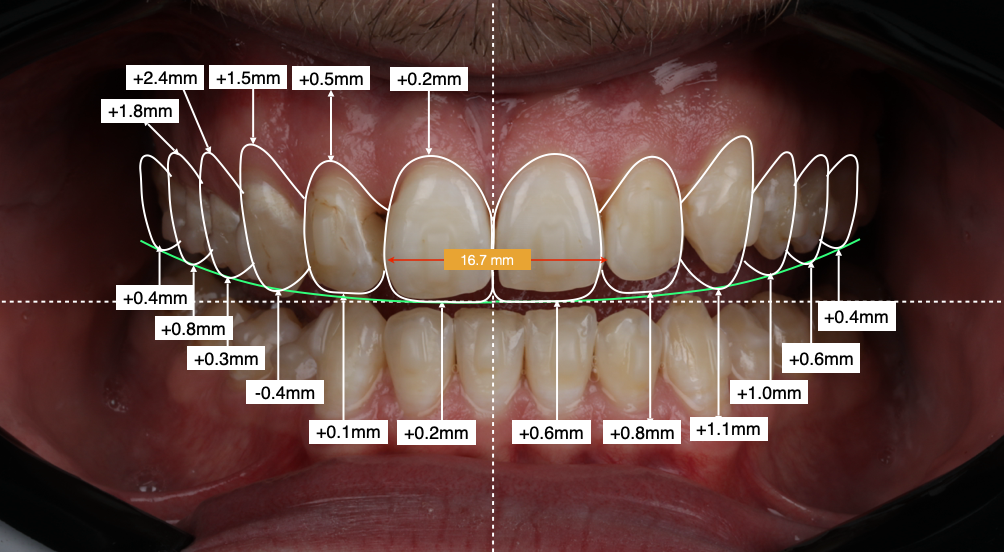
Digital smile design (DSD) uses standardised facial and dental photographs mapped to software that allows the clinician to overlay proposed tooth forms on the patient's actual smile. The digital design informs the dental laboratory's wax-up (three-dimensional model of the planned restorations), which is then translated into a temporary mock-up in the patient's mouth for direct evaluation. This sequence links the digital preview to the physical reality before irreversible treatment.
The DSD workflow begins with a specific photography protocol: full-face frontal and three-quarter views at rest and full smile, close-up dental photographs, and, increasingly, 3D intraoral scans. These records establish the baseline facial proportions, lip dynamics, gum-to-tooth ratios, and existing dental anatomy against which the proposed design is mapped. Software tools allow the clinician to trace the midline, smile arc, facial centring lines, and individual tooth outlines, then overlay the proposed tooth design as a vector drawing.
This digital prescription is sent to the ceramist as the basis for the diagnostic wax-up: a physical three-dimensional model in wax of the planned restorations on mounted plaster casts. The wax-up is the definitive clinical reference for the entire treatment, it documents the planned tooth length, width, shape, and occlusal function before any tooth is touched. From the wax-up, a vacuum-formed template is fabricated, which the clinical team uses to place composite or bis-acryl material directly in the patient's mouth as the mock-up.
You should evaluate the mock-up under natural light, and during the conditions in which you will most frequently use your smile, social conversation, photographs, and rest position as seen in a mirror. Many patients notice at the mock-up phase that the planned tooth length feels too long when speaking, or that the midline position they approved digitally reads differently against their actual face. These are precisely the corrections the mock-up is designed to capture. Changes made at the mock-up stage cost nothing beyond adjustment time; changes made after permanent restorations are cemented require full replacement.
At Stunning Dentistry, our DSD protocol includes video capture of the patient speaking and smiling during the mock-up appointment. This video is reviewed with the patient before any changes are confirmed, the dynamic view of the mock-up in natural speech reveals aspects that static photographs do not. Patients retain digital copies of their pre-treatment records, the DSD overlay, and the approved mock-up for their records.
| DSD Phase | What Occurs | Patient Involvement |
|---|---|---|
| Facial analysis | Photography, DSD software mapping, proportion analysis | Photographs taken; patient reviews overlay |
| Digital design | Clinician maps proposed tooth forms on digital images | Patient approves digital design |
| Wax-up | Ceramist fabricates 3D model of planned restorations | Review of physical model (optional) |
| Mock-up | Temporary material placed in mouth without tooth preparation | Patient evaluates for 30-60 minutes; feedback captured |
| Approval or modification | Design refined based on mock-up feedback | Patient approves; modifications documented |
| Tooth preparation | Preparation begins only after approved mock-up | Irreversible step |
| Temporaries | Temporary restorations matching approved design | Patient evaluates for 1-2 weeks |
| Final ceramics | Laboratory fabricates to approved temporary design | Review at delivery; bonding |
Questions about this procedure?
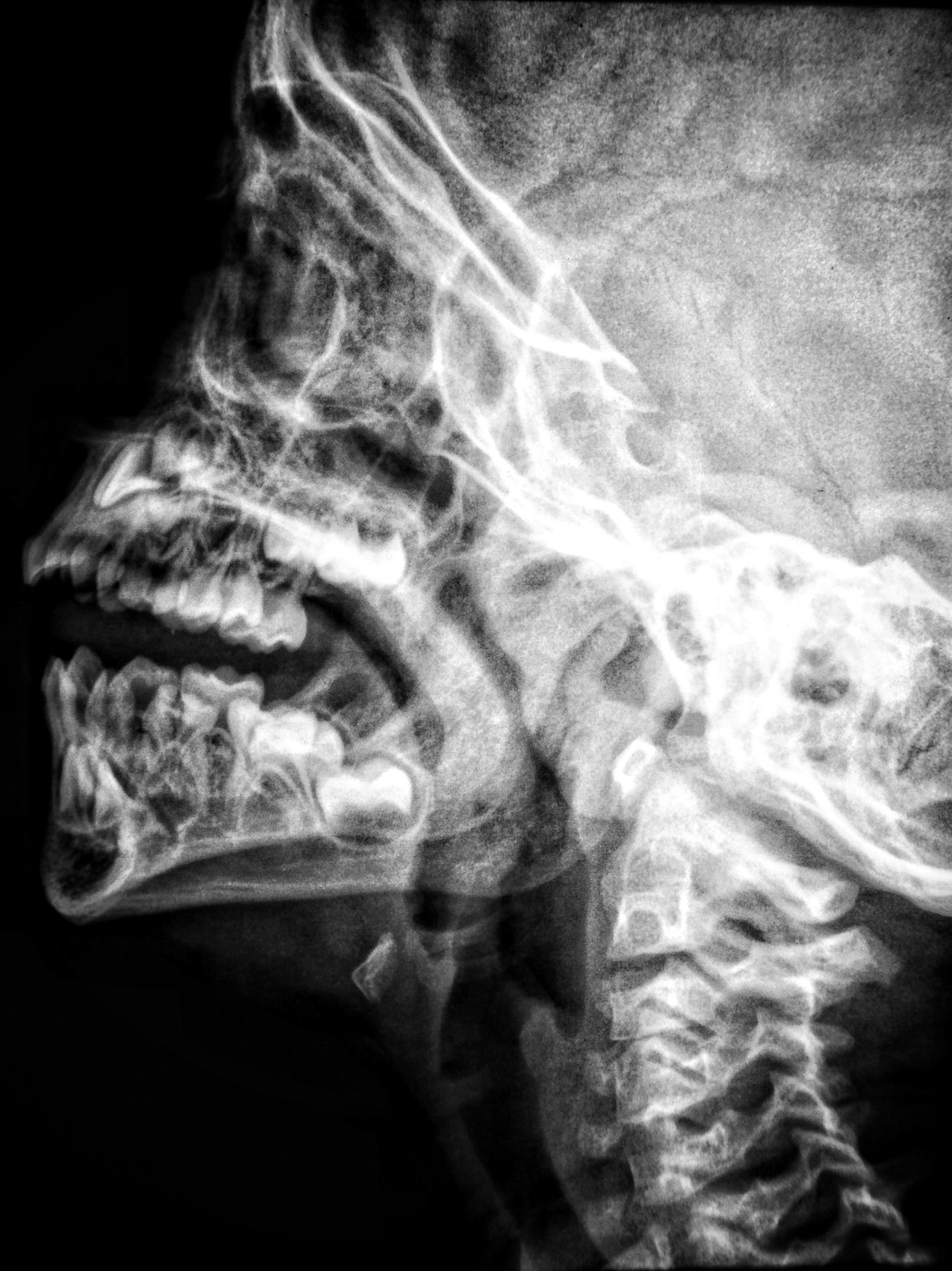
Treatment Components: What Smile Design Can Include
What procedures are typically part of smile design?
The most common components are porcelain veneers (for colour and shape correction of intact or minimally damaged anterior teeth), all-ceramic crowns (for structurally compromised teeth), composite bonding (for minor corrections or as a reversible alternative), crown lengthening or gum contouring (for gummy smile or asymmetric gum margins), and teeth whitening as a baseline treatment before matching ceramic shades.
Porcelain veneers are the most commonly used restorative component in anterior smile design. They are thin ceramic facings (0.3-0.7mm) bonded to the labial (front) surface of anterior teeth to change their colour, shape, or apparent position. Traditional veneers require 0.3-0.7mm of enamel reduction to accommodate the ceramic thickness; no-prep or minimal-prep veneers (possible in 15-25% of cases) preserve more tooth structure by using ultra-thin ceramics in cases where no tooth contour reduction is required. Once prepared, veneered teeth require permanent ceramic coverage, there is no reversing tooth reduction.
All-ceramic crowns are full-coverage restorations that replace the entire visible tooth surface. They are indicated when the tooth is structurally compromised (large existing restorations, root canal treated), when the shape deviation exceeds what a veneer can correct without excessive thickness, or when the bite load on the tooth requires full-coverage structural support. The preparation for a crown removes significantly more tooth structure than a veneer preparation; this is a relevant clinical consideration in teeth that are structurally sound and would not otherwise require preparation.
You should ask your dentist specifically why each planned restoration type was selected for each tooth, and whether a less invasive option is available for that specific tooth. In anterior smile designs involving 6-10 teeth, a mixture of minimal-preparation veneers, no-prep veneers, direct composite additions, and conservative preparations is clinically possible and preferable to uniform crown preparation across the entire arch. The least irreversible intervention that achieves the agreed design is the correct clinical choice for each individual tooth.
At Stunning Dentistry, our smile design planning process documents the restoration type selected for each individual tooth and the clinical rationale for that selection. Where a veneer preparation could replace a crown preparation without compromising the aesthetic or structural outcome, we select the less invasive option. Patients receive a tooth-by-tooth treatment map before any preparation begins.
| Component | Best Indication | Tooth Structure Removed | Reversibility |
|---|---|---|---|
| Composite bonding (direct) | Minor chips, small gaps, shape additions | None (additive) | Removable |
| No-prep veneer | Thin, slightly undersized, or retroclined tooth | None or trace | Largely reversible |
| Minimal-prep veneer | Standard colour/shape correction; intact enamel | 0.3-0.5mm enamel | Irreversible |
| Full-prep veneer | Severely discoloured, misaligned | 0.5-0.7mm | Irreversible |
| All-ceramic crown | Structurally damaged, heavily restored, large misalignment | 1.5-2mm circumferential | Irreversible |
| Crown lengthening | Gummy smile; short clinical crowns | Gum and bone tissue | Irreversible |
| Composite veneer (indirect) | Mid-range option; lower ceramic durability | Minimal (similar to veneer) | Irreversible at bonding |
Ready to discuss your options?
Materials: Porcelain, Zirconia, and Composite, What Changes
What is the difference between porcelain veneers, zirconia crowns, and composite bonding?
max) provides the best optical match to natural tooth translucency and is the preferred material for anterior veneers and crowns in aesthetic cases. Zirconia is stronger and more resistant to fracture but historically more opaque; layered or monolithic high-translucency zirconia has improved its aesthetic properties. Composite bonding is the most reversible option but less durable than ceramic and subject to colour change and surface wear over time.
Lithium disilicate ceramic (e.max by Ivoclar) is the clinical reference material for anterior smile design. Its layered structure, a reinforced glass-ceramic core with a feldspathic porcelain overlay, replicates the optical gradient from dentine to enamel, allowing the restoration to integrate visually with adjacent natural teeth. Flexural strength (approximately 400 MPa) makes it suitable for single-unit crowns and veneers in the anterior region under normal occlusal loads. It is not indicated in posterior areas carrying heavy biting force, where full-contour zirconia is the preferred material.
Monolithic high-translucency zirconia (5Y-TZP generation materials) now provides sufficient translucency for anterior aesthetics in cases where the patient's natural dentine shade is compatible with the restoration design. These materials offer fracture resistance of 650-900 MPa, substantially higher than e.max, making them appropriate for patients with bruxism or heavy anterior function where veneer fracture risk is elevated. The optical compromise compared to layered e.max is modest in modern formulations but may be detectable in high-aesthetic cases with skilled clinicians and patients.
You should understand that composite bonding, whether direct (applied chair-side in one visit) or indirect (fabricated in the laboratory), is a legitimate and reversible option for the right case, but its durability profile differs from ceramic. Direct composite is susceptible to surface staining, microchipping, and gradual colour shift over 5-8 years, requiring polishing, repair, or replacement. For patients who are uncertain about committing to ceramic, direct composite bonding provides a way to trial the aesthetic change reversibly before deciding whether permanent ceramic restorations are warranted.
At Stunning Dentistry, material selection for each tooth is documented in the treatment plan with the clinical rationale. For standard anterior smile design in patients without parafunction, e.max lithium disilicate is our default veneer and anterior crown material. In patients with documented bruxism or heavy anterior function, we recommend high-translucency zirconia veneers with a diagnostic phase to assess parafunctional risk before committing to any ceramic.
| Material | Flexural Strength | Translucency | Best Use | Durability (Expected) |
|---|---|---|---|---|
| Direct composite bonding | N/A (resin) | Moderate | Reversible trial; minor corrections | 5-8 years before maintenance |
| Indirect composite veneer | ~80-130 MPa | Good | Budget option; low-load anterior | 7-10 years |
| Feldspathic porcelain | ~80-120 MPa | Excellent | Layered veneers; high aesthetic demand | 10-15 years |
| Lithium disilicate (e.max) | ~400 MPa | Very good | Standard anterior veneers and crowns | 15-20+ years |
| Monolithic high-trans zirconia | 650-900 MPa | Good-very good | Bruxism; posterior; high-strength cases | 20+ years |
| Layered zirconia (zirconia+porcelain) | ~600 MPa core | Excellent | Complex anterior crown cases | 15-20 years |
Curious about costs and timelines?
Pain and Procedure: What to Expect
Is smile design treatment painful?
Tooth preparation for veneers and crowns is performed under local anaesthesia, the teeth are anaesthetised before drilling begins. Post-preparation sensitivity to temperature is common for 1-4 weeks after veneer preparation, particularly where enamel is thin or preparation extended close to dentine. Gum contouring produces 3-5 days of mild gum soreness. The final bonding appointment is typically non-surgical and requires only local anaesthesia for sensitivity management.
The preparation appointment for veneers or crowns is the most clinically significant phase of smile design. Under local anaesthetic, the designated amount of enamel (and occasionally dentine) is removed from the tooth surfaces to create space for the ceramic restoration. For minimal-preparation veneers (0.3-0.5mm), the preparation remains within enamel for most of its extent; for full-preparation veneers (0.5-0.7mm) and crowns (1.5-2mm), preparation may extend into dentine, which carries a higher risk of post-preparation temperature sensitivity and a small irreducible risk of pulpal stress.
Between preparation and delivery of the permanent restorations (typically 1-2 weeks), temporary restorations are placed over the prepared teeth. These temporaries replicate the approved mock-up design and serve both a protective and a preview function. Patients experience the planned aesthetic change during daily life, eating, speaking, social interaction, before the permanent restorations are delivered. This evaluation period catches any final adjustments to length, colour, or contour before the irreversible permanent phase.
You should expect temperature sensitivity on prepared teeth during the temporary phase, this is not a sign of pulpal damage but a normal response to enamel reduction exposing dentinal tubules. Sensitivity resolves in the large majority of cases after the permanent ceramic restorations are bonded and the exposed dentine is sealed. Persistent sensitivity beyond 4-6 weeks after final cementation, or spontaneous ache without thermal stimulus, warrants clinical review to assess pulpal status.
At Stunning Dentistry, we use the most conservative preparation depth that achieves the planned aesthetic result for each tooth. All preparations are checked intraoperatively with a calibrated probe to confirm adequate depth without exceeding the planned reduction. Patients receive written information about expected temporary-phase sensitivity and the timeline within which it should resolve before they leave the preparation appointment.
Want a personalised treatment plan?
Risk Transparency
What can go wrong with smile design treatment?
The most clinically significant risks are pulpal stress from preparation (rare but occurs in 1-5% of prepared teeth, potentially requiring root canal treatment), veneer fracture or debonding (more common with porcelain under heavy bite or parafunctional forces), colour or translucency mismatch between adjacent restorations and natural teeth, and patient dissatisfaction with the aesthetic result when the mock-up phase was inadequately conducted or the patient's expectations were not clearly defined.
Preparation-induced pulpal damage is an irreducible risk of any procedure that removes tooth structure. For minimal-preparation veneers that stay within enamel, pulpal risk is very low (< 1%). Full-preparation veneers and crowns, particularly in teeth with larger pulp chambers (younger patients) or teeth with pre-existing sensitivity, carry a higher risk. Pulpal stress may present as transient sensitivity that resolves as the tooth heals, or as irreversible pulpitis requiring root canal treatment. Published rates of pulpal necrosis following elective veneer preparation range from 1-5% over 10 years.
Veneer fracture in the anterior region is primarily associated with parafunctional habits, nocturnal bruxism, nail biting, pen chewing, or anterior edge-to-edge loading, and with preparation designs that leave insufficient ceramic thickness at incisal edges or occlusal contact points. Ceramic veneers bonded to properly prepared teeth with adequate thickness and protected by a night guard in parafunctional patients show fracture rates below 5% at 10 years in published series. Patients with active uncontrolled bruxism are not candidates for thin ceramic veneers until the parafunction is addressed.
You should disclose any history of jaw clenching, teeth grinding, nocturnal bruxism, or unexplained anterior tooth wear before veneer planning. Bruxism in combination with veneers is a manageable combination, it requires more robust material selection (zirconia rather than e.max), possible occlusal adjustment to reduce anterior guidance loading, and a night guard on delivery, but it is not a contraindication if addressed systematically.
At Stunning Dentistry, all veneer and crown patients complete a bruxism screening questionnaire before treatment planning. Patients with positive screening findings receive a clinical assessment of tooth wear patterns, and material selection is adjusted accordingly. All veneer and crown patients receive a custom occlusal night guard as part of the smile design protocol, fabricated after final cementation to protect the restorations during sleep.
| Risk | Frequency | Trigger | Management |
|---|---|---|---|
| Pulpal stress / necrosis | 1-5% (10-year) | Deep preparation, pre-existing sensitivity | Root canal treatment; no restoration loss |
| Veneer fracture | 3-7% (10-year) | Bruxism, edge-loading, thin incisal ceramic | Material change; night guard; repair or replacement |
| Debonding | 2-5% (5-year) | Inadequate bond preparation; moisture contamination | Re-bonding; check bite |
| Colour mismatch | Case-dependent | Poor shade communication; unrealistic expectations | Return to lab; re-fabricate |
| Gum recession over veneered teeth | < 5% | Preparation margin placement; gum health | Gum graft if significant |
| Tooth sensitivity (permanent) | 5-10% at 1 year | Thin enamel remaining; deep preparation | Desensitising; monitor |
Questions about this procedure?
Clinical Success Determinants
| Success Factor | Why It Matters | What to Verify |
|---|---|---|
| Digital Smile Design and mock-up phase | Prevents aesthetic dissatisfaction; aligns expectations before preparation | Ask whether DSD and physical mock-up are included |
| Conservative preparation philosophy | Minimises pulpal risk and allows future retreatment options | Ask maximum preparation depth planned per tooth |
| Material selection matched to bite force | Bruxism + e.max = fracture risk; must use zirconia | Confirm bruxism assessment is included |
| Ceramist quality and communication | Aesthetic integration depends on ceramic craftsmanship | Ask who fabricates the restorations and their portfolio |
| Shade matching under natural light | Lab shade done under fluorescent light often fails in daylight | Confirm shade is taken and checked under natural light |
| Occlusal equilibration at delivery | High contact spots cause fracture and bite discomfort | Confirm occlusion is checked with articulating paper at delivery |
| Night guard delivery | Protects restorations from nocturnal loading | Confirm night guard is fabricated and delivered post-treatment |
| Gum health before preparation | Gum disease causes recession that exposes preparation margins | Confirm perio is healthy before any smile design begins |
| Informed consent with mock-up approval | Patient must see and approve the result before it is made permanent | Confirm that mock-up approval is a documented clinical gate |
Ready to discuss your options?
Longevity and Maintenance
Porcelain and lithium disilicate veneers and crowns have a long clinical record. Published studies consistently report survival rates of 90-95% at 10 years for e.max anterior crowns and veneers in appropriately selected patients. The key determinants of longevity are: absence of uncontrolled parafunction, maintained gum health, adequate ceramic thickness, and correct bonding technique. Veneers that fail are most commonly replaced rather than rendered irreplaceable, the preparation depth typically allows for re-restoration with the same or slightly more coverage.
Maintenance requirements for ceramic restorations are straightforward. Flossing with e-floss or a water flosser rather than forcing standard floss aggressively through tight contacts prevents ceramic edge chipping. Avoiding sustained impact loading, biting fingernails, using teeth as tools, reduces the risk of fracture. The night guard, if worn consistently, addresses the most common cause of early veneer failure in parafunctional patients. Periodic professional polishing (every 12 months) maintains the surface finish of ceramic restorations and checks bonded margins for early debonding.
You should plan for the possibility of replacement at some point in the future, the 10-15-year mark is when many ceramic restorations begin to show signs of wear, margin staining, or gum recession that warrants clinical review. Replacement does not mean failure of the original treatment; ceramic restorations have a finite lifespan like any dental material. Planning for periodic replacement is preferable to expecting permanent outcomes from any dental restoration, regardless of material quality.
At Stunning Dentistry, our smile design patients receive a written maintenance protocol including night guard care, flossing technique for veneers, and a recall schedule. We document the shade, material, and bonding agent used for every restoration so that future replacements, wherever performed, can be matched to the established plan.
Curious about costs and timelines?
When Smile Design Is Not the Right Approach
Are there cases where smile design is not appropriate?
Smile design is not the right approach when active periodontal disease, untreated decay, or significant occlusal dysfunction exists, these must be resolved before any aesthetic treatment begins. Patients with active bruxism that is unmanaged, severe dental phobia that prevents restorative procedures, or unrealistic expectations that no achievable aesthetic outcome could satisfy are not candidates for elective ceramic restorations until those conditions are addressed.
Active gum disease is an absolute contraindication to elective veneer and crown preparation. Inflamed gum tissue bleeds when prepared, prevents accurate impression or digital scan records, shifts position unpredictably, and will retract after treatment is complete, exposing preparation margins that the restored gum line was designed to cover. Periodontal treatment, stability confirmation, and a minimum of 3-6 months of healthy gum tissue are required before aesthetic preparation begins.
Patients with unrealistic expectations about what smile design can achieve, including corrections of facial asymmetry, which is skeletal rather than dental; significant jaw discrepancies; or anterior bite changes that require orthodontic or orthognathic treatment, are not served by veneers or crowns alone. The planning process should identify the limits of what aesthetic dentistry can achieve for a specific patient's anatomy, and present a realistic expectation before treatment is committed to.
You should not proceed with irreversible tooth preparation if you have not had a mock-up, have not seen a digital simulation of the planned outcome, or are uncertain about the proposed tooth form, length, or colour. The regret associated with smile design outcomes is almost universally attributable to insufficient planning phase, either the mock-up was skipped, was performed poorly, or the patient approved a design they did not fully evaluate. These are preventable outcomes.
At Stunning Dentistry, we apply a structured readiness checklist before any smile design preparation is confirmed. This checklist verifies: periodontal health is stable, the patient has reviewed and approved the DSD, the mock-up has been evaluated for a minimum of 30 minutes, the patient has returned the mock-up approval form in writing, and no open questions about the aesthetic outcome remain. The preparation appointment is only booked when all items on this checklist are confirmed.
Want a personalised treatment plan?
Reversible vs Irreversible Options
One of the most important clinical distinctions in smile design is between additive (reversible) and subtractive (irreversible) approaches. Composite bonding, added to the tooth surface without preparation, is an additive procedure, the composite can be removed at any point and the tooth is unchanged. No-prep veneers (Lumineers, ultra-thin ceramics) are additive for the small percentage of cases where no reduction is required, approximately 15-25% of candidates in published assessments. All other ceramic veneers and crowns are subtractive: they require removal of tooth structure that cannot be replaced.
This distinction matters most when the patient is uncertain about committing to a permanent change, when the aesthetic goal is not yet precisely defined, or when the patient is younger (a 22-year-old committing to full-preparation veneers is committing to ceramic coverage of those teeth for the rest of their life, through multiple replacement cycles). In these situations, a diagnostic composite bonding treatment, performed reversibly to preview the aesthetic result in real life, is a clinically rational intermediate step before permanent ceramic preparation is considered.
You should understand that "no-prep veneers" marketed as available to all patients are not. They are anatomically appropriate only for teeth that are slightly underdeveloped, retroclined, or naturally thin, where adding ceramic thickness without removing any tooth structure achieves the planned result without excess bulkiness. For the majority of anterior smile design cases involving normal or prominent tooth size, no-prep veneers produce overcontoured, shelf-like results that look artificial against adjacent natural teeth. The decision is anatomical, not preferential.
At Stunning Dentistry, we assess every anterior smile design case for no-prep and minimal-prep candidacy before planning full-preparation veneers. Where composite bonding achieves 80-90% of the planned aesthetic result with no preparation, we present this as the first option. Where it does not, because the colour correction required exceeds what composite can achieve, or the shade change needed requires ceramic opacity, we present the veneer option with a full explanation of what preparation will involve.
Questions about this procedure?
What This Costs
How much does smile design cost?
The cost of a smile design depends on how many teeth are involved and which restorations your case needs, so it is confirmed in a written, itemised quote after your digital smile analysis rather than priced from a web page. At Stunning Dentistry the fee for veneers, crowns, and a complete Digital Smile Design sits well below the equivalent New Zealand cosmetic-dentistry fee.
The cost of a smile design is driven by the variables that define your case: how many teeth are visible at full smile and need treatment, the restoration type selected per tooth (composite bonding, a minimal-prep veneer, a full veneer, or an all-ceramic crown), the material (IPS e.max lithium disilicate through to high-translucency zirconia), and whether adjuncts such as crown lengthening are required. A blanket per-arch figure quoted before your digital analysis is an estimate, not a treatment plan.
After your digital smile analysis and mock-up you receive a written, itemised quote for your exact case, confirmed in writing before any irreversible preparation begins. Stunning Dentistry uses the same IPS e.max (Ivoclar) lithium disilicate and high-translucency zirconia specified by New Zealand cosmetic dental laboratories; the cost differential reflects laboratory fees and overhead structure, not ceramic quality. The Digital Smile Design process, facial analysis, mock-up, and ceramist collaboration are included rather than charged separately as they often are in New Zealand, and most cases are completed within a single 7-10 day visit rather than across 4-8 weeks of appointments.
For the full New Zealand-versus-Stunning cost comparison, financing options, and a personalized quote, see Cost & Finance and the Cost Comparison tool.
Ready to discuss your options?
Treatment Comparison Matrix
| Factor | Porcelain Veneers (e.max) | Composite Bonding | All-Ceramic Crowns | Orthodontics |
|---|---|---|---|---|
| Reversibility | Irreversible (preparation) | Reversible (additive) | Irreversible | Reversible |
| Tooth structure removed | 0.3-0.7mm enamel | None | 1.5-2mm circumferential | None |
| Colour correction capacity | Full range | Limited (intrinsic staining) | Full range | None |
| Shape correction capacity | High | Moderate | High | Limited |
| Durability | 15-20+ years | 5-8 years | 15-20+ years | N/A (permanent) |
| Treatment time | 7-14 days (prepared + lab) | 1-2 visits | 7-14 days | 12-24 months |
| Best for | Comprehensive colour + shape change | Minor corrections; uncertain patients | Structurally compromised teeth | Alignment primary issue |
Curious about costs and timelines?
Post-Treatment Reality
The period immediately after final ceramic delivery is an adjustment phase. Patients adapt to the new tooth dimensions, which may feel slightly different in speech and tongue position for 1-4 weeks, and the bite is fine-tuned at a review appointment. High contact points identified with articulating paper are adjusted to ensure even, balanced occlusal distribution. This adjustment phase is not a complication; it is an expected and planned component of final delivery.
The aesthetic result seen immediately after delivery is accurate but evolves slightly over the first few weeks. The initial "brightness" of new ceramic against gum tissue that is still slightly irritated from preparation settles as the gum recovers and natural viewing conditions replace clinical lighting. Most patients report that the first 3-4 weeks represent the most significant adjustment period; by 6 weeks, the result feels completely natural in both function and appearance.
You should bring the photos from your DSD approval and mock-up to the delivery appointment to compare directly with the delivered result. If any element of the delivered ceramic does not match the approved mock-up design, shade, length, contact shape, gum display, these should be identified at the delivery appointment before bonding is completed. Once ceramics are permanently bonded, remakes require full crown or veneer replacement.
At Stunning Dentistry, all ceramic restorations are evaluated against the approved mock-up record before bonding. A try-in is performed first in try-in paste without permanent bonding, and the patient confirms the aesthetic outcome under natural light before final cementation proceeds. Any adjustment required at try-in is returned to the laboratory rather than adjusted chair-side, ensuring the final bonded result matches the approved standard.
Want a personalised treatment plan?
Common Mistakes
What causes smile design patients to be dissatisfied?
The majority of smile design dissatisfaction is attributable to insufficient planning, missing or inadequate mock-up, digital design not presented to the patient before preparation, shade communication breakdown between dentist and laboratory, and unmanaged parafunctional habits that lead to early veneer fracture. These are not material failures; they are process failures that a structured planning protocol prevents.
Preparing teeth for veneers without a mock-up is the most preventable cause of dissatisfaction in smile design. Without a physical mock-up worn in the mouth, the patient has no opportunity to evaluate the planned tooth length under natural conditions. Changes in speech patterns, the feel of new incisal edges on the tongue, or dissatisfaction with the smile arc in natural light are only discoverable by wearing the proposed form, not by reviewing digital photographs on a monitor.
Shade selection under clinical lighting rather than natural light is a common technical error. Clinical dental lighting shifts perceived tooth colour toward grey-white and masks the warmth that makes ceramic teeth look natural in social daylight. Shade selection should always include a step conducted near a window or under a balanced full-spectrum light source, and the patient should view the shade tabs against their face rather than against a grey clinical background.
You should not proceed with preparation on any tooth where the planned restoration type has not been individually justified. A blanket "10 veneers" treatment plan without individual tooth-level rationale, which tooth genuinely needs what procedure, and why, is a process in which over-preparation is very easy to introduce. Each tooth should be evaluated individually for the least-invasive restoration that achieves the planned result.
At Stunning Dentistry, the treatment plan presented to each smile design patient contains a tooth-by-tooth restoration map with the justification for each choice, the planned preparation depth, the material selected, and the reversibility status. This document is signed by both patient and clinician before preparation proceeds, and forms the clinical record against which the delivered result is evaluated.
Questions about this procedure?
Myth Deconstruction
Myth: "Veneers look fake and obviously dental."
Poorly designed veneers, uniform opacity, excessive whiteness, mismatched proportions, do look artificial. Correctly designed veneers that respect the patient's facial proportions, use stratified ceramic with appropriate translucency, and are fabricated by an experienced ceramist to the patient's specific design are typically not detectable as veneers in normal social interaction. The result quality is a function of planning precision and ceramic craftsmanship, not an inherent property of the material.
Myth: "Veneers are permanent and last a lifetime."
Ceramic veneers are durable long-term restorations with expected lifespans of 15-20+ years in well-maintained patients without parafunction. They are not permanent in the sense of never requiring replacement, no dental restoration is. Planning for ceramic replacement at some point in the life of the treated teeth is clinically realistic and should be discussed at the planning stage.
Myth: "Whitening is a substitute for veneers for badly discoloured teeth."
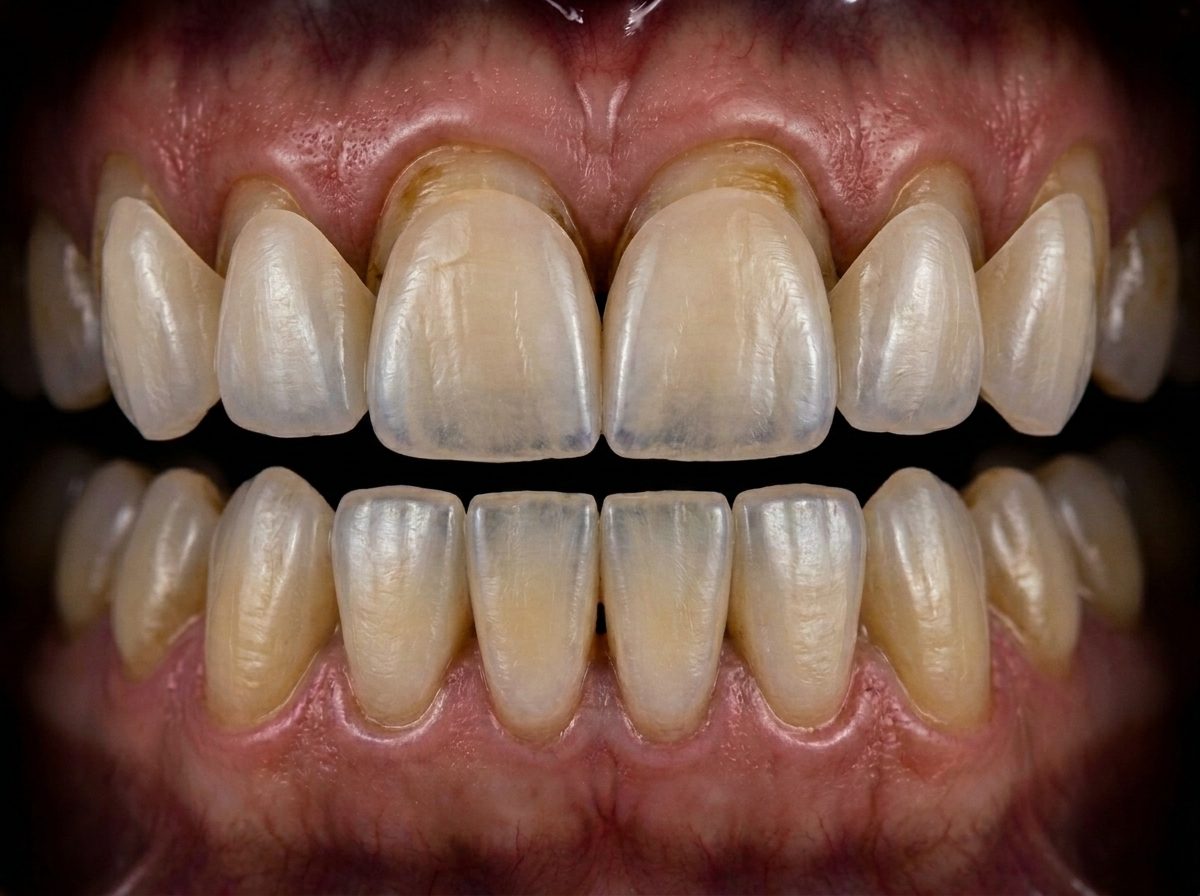
Vital tooth whitening (peroxide-based bleaching) acts on intrinsic chromophores within the dentine of vital teeth and is effective for yellow-brown extrinsic and mild intrinsic discolouration. It does not correct grey discolouration from prior trauma, tetracycline staining within the dentinal tubules, or fluorosis that affects enamel crystalline structure. For these presentations, ceramic veneers are indicated, whitening will not achieve a comparable result and in some cases (fluorosis) will actively worsen the appearance.
Myth: "The more teeth included in smile design, the better the result."
Including additional teeth in a smile design beyond those visible in the patient's smile or requiring aesthetic correction adds cost, complexity, and risk without aesthetic benefit. The planning process should identify which teeth are visible at various smile widths and include only those teeth in the treatment design. Unnecessary preparation of premolars that are not visible at the patient's natural smile width is not a clinical improvement.
Ready to discuss your options?
People Also Ask
How many veneers are typically needed for a smile design?
The number depends on the patient's smile width, specifically, how many teeth are visible at full smile. For most patients, 6-10 anterior teeth (centrals, laterals, and canines; sometimes the first premolars) are visible at full smile. Treatment of fewer than the full visible set risks shade mismatch between treated and untreated adjacent teeth. The correct number is determined by the individual smile analysis, not by a predetermined count.
Can I get veneers over crooked teeth?
Mild to moderate crowding may be correctable with veneers by adjusting the apparent axis and contour of teeth within limits. Significant crowding requires orthodontic treatment first, because excessive veneer thickness on rotated or misaligned teeth creates unacceptable contour and embrasure form. Orthodontics before veneers produces the best and most natural result in cases with meaningful alignment issues.
How do I maintain ceramic veneers?
Consistent twice-daily brushing with a non-abrasive fluoride toothpaste, daily flossing (water flosser or e-floss for veneer margins), and wearing a custom night guard if any parafunctional habits are present. Avoid biting hard objects directly with veneered anterior teeth (ice, nails, bottle caps). Annual professional polishing checks bonded margins. Veneers do not require special cleaning products, normal oral hygiene is adequate.
Can veneers fix a gummy smile?
Veneers alone do not treat a gummy smile if the excessive gingival display is due to gum overgrowth (passive eruption failure) or a short upper lip. Crown lengthening (gingivectomy with or without osseous recontouring) addresses the gum architecture before veneers are placed. In some cases, crown lengthening alone, without veneers, resolves the gummy smile by repositioning the gum line to reveal natural tooth length already present below.
Is smile design treatment done in one visit?
A comprehensive smile design treatment requiring preparation, laboratory fabrication, and permanent bonding is not completed in one visit regardless of technique, the laboratory fabrication of ceramic restorations requires 5-7 working days minimum. Cases involving composite bonding only can be completed chair-side in 1-2 appointments. At Stunning Dentistry, the total treatment period for ceramic smile design is typically 7-10 days, accommodating patients within a single travel visit.
Curious about costs and timelines?
Ask Your Doctor
- Is a digital smile design simulation and physical mock-up included in my treatment, and when do I evaluate it?
- What is the planned preparation depth for each tooth, and is minimal-preparation or no-prep possible for any teeth in my plan?
- Who fabricates the ceramic restorations, in-house or at an external laboratory, and can I see their aesthetic work?
- How will shade be selected, and will it be checked under natural light as well as clinical light?
- What material is planned for each tooth, and why was that material chosen over the alternatives?
- Am I a candidate for composite bonding as a reversible first step to evaluate the aesthetic change before committing to ceramics?
- Do I have any bruxism indicators, and how will that affect material selection and post-treatment protection?
- Will I receive a night guard after treatment, and is that included in the cost?
Want a personalised treatment plan?
Questions about this procedure?
Ready to discuss your options?
For New Zealand Patients
Pre-Travel Checklist for New Zealand Patients Considering Smile Design in India
Dental Angel Handover: Stunning Dentistry provides a complete clinical record set for all smile design patients: the DSD digital files, the approved mock-up photographs, the ceramist prescription sheet, the shade record, and a restoration log (tooth by tooth: material, bonding agent, prep depth, shade). This file enables any New Zealand dentist to understand the treatment that was performed, re-match restorations when replacement is needed, and monitor margins at recall appointments.
| Step | Action | When |
|---|---|---|
| 1 | Collect existing dental records (X-rays, previous treatment history) | Before booking travel |
| 2 | Photograph your smile, full-face, close-up, profile, at rest and full smile | Before travel |
| 3 | Send photos and records to Stunning Dentistry for preliminary DSD preview | 4-6 weeks before travel |
| 4 | Ensure gums are healthy; confirm with a New Zealand dentist if uncertain | Pre-travel |
| 5 | Disclose any history of grinding, jaw pain, or previous cosmetic dental treatment | Intake form |
| 6 | Plan minimum 10-day visit for full smile design with ceramic restorations | Before booking flights |
| 7 | Arrange local New Zealand dentist for post-treatment monitoring; bring treatment records | Post-treatment |
| 8 | Schedule night guard delivery, either at SD before departure or with local dentist post-return | At or shortly after delivery |
Curious about costs and timelines?
Clinical References
1. Gürel G. "The Science and Art of Porcelain Laminate Veneers." London: Quintessence Publishing, 2003.
Medically Reviewed, Stunning Dentistry Cosmetic and Restorative Dentistry Team. Protocols aligned with AACD cosmetic dental standards and published evidence on ceramic veneer longevity. Content reviewed May 2026.
Want a personalised treatment plan?
Ready to Start?
Every case is planned by a named lead clinician and backed by a written Lifetime Warranty. Share your scans or a photo for a no-obligation clinical assessment.
Diagnosis precedes decision.
Questions about this procedure?
Specialist-only treatment planning
- Remote file review before travel
- Evidence-led treatment checkpoints
No waiting list for eligible cases
- Remote file review before travel
- Evidence-led treatment checkpoints
Trip coordinated with care timeline
- Remote file review before travel
- Evidence-led treatment checkpoints
Our Partners









Why Us
Frequently Asked Questions
Can veneers be placed on teeth that have had root canal treatment?
Root canal treated teeth can receive veneers if they are not structurally compromised to the point of requiring full-coverage crowns. The key assessment is: how much sound coronal tooth structure remains? Teeth with intact labial surfaces and minimal structural damage can be veneered normally. Teeth that are heavily restored, have large post-and-core buildups, or have thin remaining enamel are better candidates for all-ceramic crowns.
What happens if I don't like the final result?
If the delivered ceramic does not match the approved mock-up, this is a legitimate clinical concern. The appropriate response is for the clinician to identify the specific departure from the approved design and either adjust or remake the restoration. Once permanently bonded, remakes require full veneer or crown replacement. This is why the try-in step, evaluation before final bonding, is non-negotiable and must result in patient approval before cementation.
Can smile design be combined with dental implants?
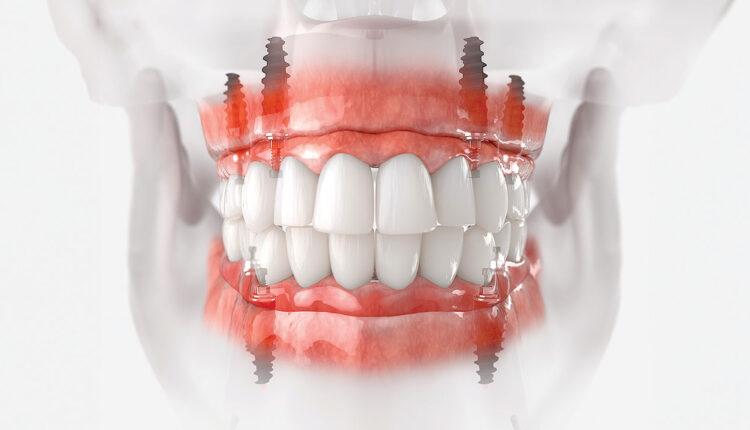
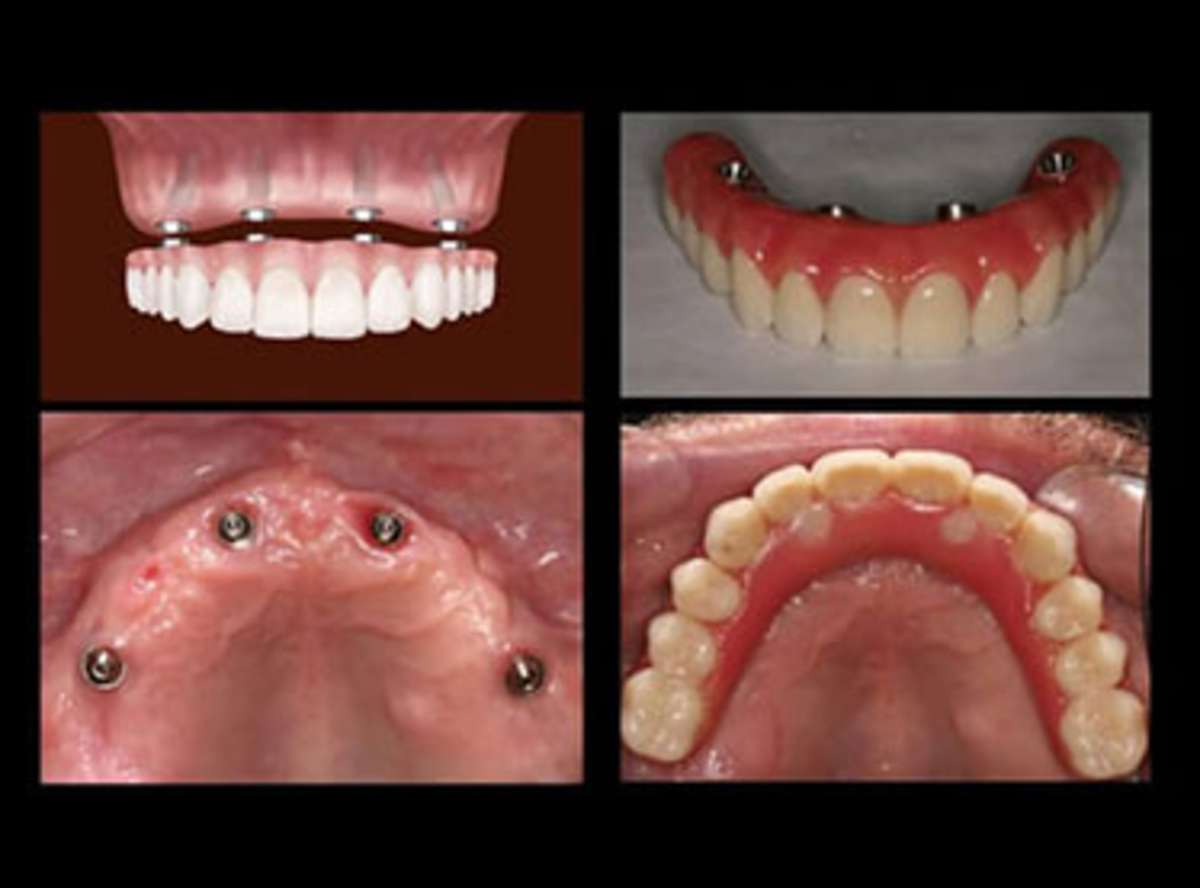
Yes, and frequently is. In patients with one or more missing anterior teeth, the implant crown is designed as part of the overall smile design to integrate seamlessly with the adjacent ceramic veneers or natural teeth. The implant crown shade, contour, and gingival emergence profile are all determined within the DSD planning framework. Implant placement precedes the veneer preparation phase by the implant healing period (3-6 months).
Can I get smile design treatment if I am pregnant?
Elective dental procedures including veneer preparation and ceramic bonding are typically deferred until after delivery to minimise fetal exposure to local anaesthetics and X-ray, and to ensure the patient can lie comfortably in the dental chair for extended appointments. Routine monitoring and emergency treatment proceed normally; elective smile design is scheduled post-partum.
See your new smile instantly!
This tool will help you understand potential structural and aesthetic changes before finalizing treatment decisions.